





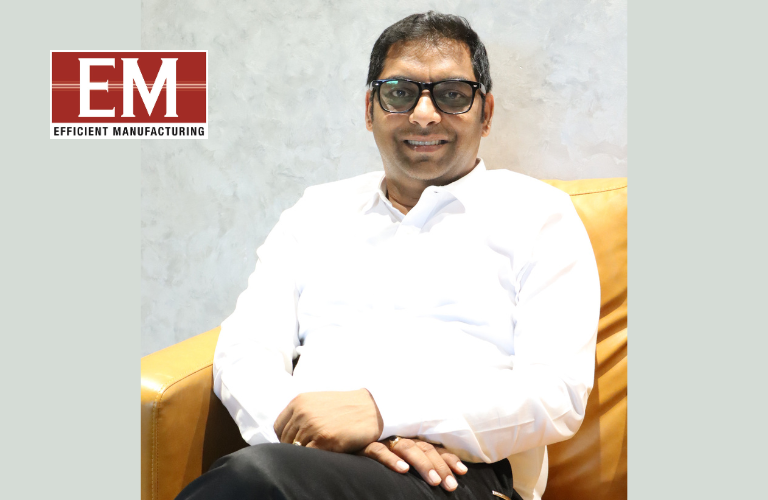



… Kausthub Kaundinya, Founder & CEO at Jarsh Safety, in conversation with Efficient Manufacturing Magazine
Q. What inspired the founding of Jarsh Safety, and what key problem were you trying to solve in the industrial safety segment?
Jarsh began with a practical observation on factory floors: PPE felt dated, uncomfortable and mainly reactive. The founders, engineers who turned a portable AC concept into the world’s first air-conditioned safety helmet, saw a bigger opportunity: make safety proactive, comfortable and data-driven so workers actually use it. That shift from “barrier” to “guardian” led to connected solutions (cooling helmets, voltage alerts, fall detection) designed to prevent predictable harm like heat stress, electrocution and falls. The mission: transform safety from compliance tick-box into technology-led prevention that saves lives.
Q. Jarsh has worked with sectors like manufacturing, construction, and defense. How do you tailor your offerings to such diverse industries?
Jarsh tailors by starting with the hazard, not the product. Teams map the primary risks, heat in steel plants, live-wire exposure in utilities, fall and access challenges in construction, then choose modular hardware and firmware to match. Solutions like the AC helmet, SmartVolt voltage alerts, and the Kavach harness are configurable and piloted on site; dashboards convert raw sensor data into straightforward alerts for supervisors. That modular, pilot-first approach keeps integration light, reduces noise, and delivers outcomes (reduced incidents, better compliance) rather than off-the-shelf gear that may miss industry specifics.
Q. How receptive are Indian industries to adopting smart safety solutions versus conventional gear?
Receptivity has shifted from sceptical to pragmatic. Cost and habit once favoured basic PPE, but measurable outcomes, less downtime, fewer heat-related incidents and regulatory pressure, are changing minds. Jarsh’s track record (30,000+ workers protected) and visible pilots with large clients have turned early adopters into advocates. Today procurement teams favour proof-led rollouts: short pilots that show incident reduction, productivity gains or worker retention. In short, adoption is moving from the novelty phase to operational procurement when ROI and worker welfare are demonstrable.
Q. Are Indian-made safety products gaining recognition in global markets?
Yes. Indian smart-PPE is graduating from local fixes to competitive exports. Jarsh’s strategy, patented IP, focused regional expansion (Middle East presence) and a product set solving universal problems like heat stress and electrocution, maps well to GCC, South Asia and Africa. Recognition today is commercial (pilots and distributor interest), regulatory (moving toward international certifications) and reputational (industry awards, investor backing). The next step is scaling manufacturing and certification to convert regional interest into sustained global uptake. Momentum is real; the challenge now is supply-chain scale and compliance at export grade.

