


Trending Insights
Bharat Forge and Liebherr-Aerospace Launch Advanced Landing Gear Machining Facility in Pune FAULHABER BXI: Made for the Next Generation of Robotics Schneider Electric launches ‘One Unit Mission’ to Accelerate India’s Energy Efficiency Movement Why Software-Defined Vehicles Are Transforming Automotive Engineering, Ownership And Mobility Ecosystems Funding the Net-Zero Path: Carbon Capture Utilisation and Storage in Budget 2026 The Value-Centric Shift: How Global Manufacturing is Trading Optimization for Resilience Microscopy 4.0: Powering India’s Deep-Tech & Semiconductor Ambitions Alligator Automations Sets Up New PCMC Office in Pune to Strengthen Engineering and Operations Teams Fans Asked, Mahindra Listened: The BE 6 Batman Edition Returns Women Redefining Manufacturing Beckhoff Facilitates Physical AI Taking Automation to The Next Level With Natural Language NABL Accreditation Explained: What It Means forIndustrial Testing Labs in Bharat The End-to-End Process of Sheet-Metal Fabrication and Galvanising in Construction Supplies From Process Automation to Autonomous Coordination: Reimagining Manufacturing with Collaborative & Agentic AI Engineering Future-Ready Façade Solutions Through Innovation, Compliance & Sustainable Manufacturing Policy, Trade, and Incentives: A Roadmap for Sustaining Manufacturing Employment in India KPIT and IIT Bombay ink MOU to anchor cutting edge research and product development for next-gen mobility SiMa.ai and STIGA S.p.A. Announce Strategic Partnership in Physical AI The ePlane Company Unveils India’s Largest Integrated eVTOL Prototyping and Testing Facility at IIT Madras Discovery Campus University of Warwick’s study reveals Cleaner Solar Manufacturing Could Cut Global Emissions By 8.2 Billion Tonnes By 2035 Kaynes Semicon Announces Strategic Adoption of Synopsys Simulation Software Mitsubishi Electric India hosts 6th ME Cup, Sona College of Technology emerges winner among 35 selected teams Make in India, Hire in Bharat: Manufacturing’s Next Constraint Is Not Capital Precision Engineering Technologies and WFL Join Forces to Accelerate Complete Machining Adoption Across Indian Manufacturing Showcasing the Future of Smart Manufacturing at B&R Innovations Day 2026 Indian Army Successfully validate “Advance 28-ft Heavy Drop System – 20T (Type V)” Configuration Auto Component Manufacturing and the EV Shift: Policy, Investment and Innovation Priorities QVI India Opens New Office and Advanced Demo Centre in Bengaluru Ashok Leyland Plans Big Expansion in Western India WIDIA Turns 100: Defining and Celebrating a Century of Metal Cutting Solutions ACMA Automechanika New Delhi marks a major milestone, attracting 35,750 visitors alongside robust global participation from 870 exhibitors IMTEX FORMING 2026 Asia’s Largest Exhibition on Metal Forming and Manufacturing Technologies Records Consistent Growth in Size and Business Orders Tata Advanced Systems inaugurates helicopter production line for Airbus H125 helicopter to boost India’s vertical-lift capabilities Scaling CAE for High-Volume Manufacturing Environments Sona Comstar Integrating AI, Robotics and Electronics to Build a World-Class Mobility Technology Company: Priya Kapur at India-AI Impact Summit 2026 iCreate Drone Challenge Demo Day Showcases 14 Homegrown Startups Advancing India’s Indigenous Drone Technologies India AI Impact Summit 2026 Commences at Bharat Mandapam with Unprecedented Global Participation LMT Tools India Unveils Nation’s Largest Gear Cutting Tool Plant in Chakan BorgWarner to Supply Variable Turbine Geometry Turbocharger for Major European OEMs’ Hybrid Electric Vehicle Platform MIC Electronics Secures ₹4.45 Crore Orders from Eastern Railway ACMA–BCG Joint Study Highlights Smart Factories as a Key Enabler of India’s Auto Component Growth & Competitiveness CNH India Leads the Mechanization Movement with World-Class Crop Solutions Steelbird International Showcases Automotive Component Portfolio at ACMA Automechanika 2026 RODIM Launches R-Star Advanced Paint Protection Film at Automechanika 2026 Synopsys to Showcase AI-Driven Engineering Innovation at India AI Impact Summit 2026 Adhesive Dispensing in Automotive Body Shops: Driving Safety, Efficiency, and Durability MAHLE HeatX Range+ for More Range in Winter RIR Power Electronics Limited appoints N Ramesh Kumar as Managing Director and Chief Executive Officer Euler Motors and Jio-bp partner to accelerate EV charging infrastructure for commercial electric vehicles in India ACMA welcomes the India–US Trade Interim Agreement Framework Hindustan Zinc and Jawaharlal Nehru Centre for Advanced Scientific Research Advance Zinc-Ion Battery Technology for Large-Scale Energy Storage Cobots for Precision Manufacturing ACMA Automechanika New Delhi 2026 opens, spotlighting India’s global aftermarket ambitions Addverb Unveils Elixis-W, Its First Wheeled Humanoid, and Advanced Intralogistics Solutions at LogiMAT India 2026 How India Is Building Its Semiconductor Future Enabling India’s NextChapter in Sustainable, High-Performance Manufacturing Mahindra bags its biggest ever export order; 35,000 units of LCVs to be delivered to Agrinas Pangan Nusantara, Indonesia in 2026 Manufacturing the Future: Reforms, Technology, and the Road to Viksit Bharat 2047 Landmark US-India Trade Deal Eases Tariffs, Opens New Opportunities for Indian Industry SIAM Hosts 20th Styling & Design Conclave and 18th Automotive Design Challenge LSKB Aluminium Foils and JUPALCO Host Global Aluminium Foil Industry Leaders at Sonipat Facility During GLAFCO 2026 Budget 2026 Signals a Manufacturing-Led Growth Push Across Strategic Sectors Union Budget 2026: Manufacturing Industry Sets Its Expectations Customisable E-Rickshaws: The Rising Trend in Commercial Mobility Breaking the Bandwidth Barrier: How Co-Packaged Optics is Redefining High-Speed Connectivity Eastman IMPEX Showcased Advanced Formwork, Shoring and Scaffolding Solutions at World of Concrete 2026 Adani Defence & Aerospace and Embraer announce Strategic Partnership to Establish Regional Transport Aircraft Ecosystem in India Inovance India Expands Operations with New 50,000 sq. ft. Warehouse ACMA Welcomes the India–EU Free Trade Agreement From Local to Global: India’s Aftermarket and Auto component Industry Steps into the Global Fast Lane at ACMA Automechanika New Delhi IMTEX FORMING 2026 Showcased the Future of Metal Forming and Manufacturing New Greenfield Manufacturing Facility in India Strengthens Molding Solutions’ Global Strategy Swedish Clean-Tech Innovator KonveGas to Tackle India’s Energy Storage Bottleneck Neolite ZKW holds the Commemorative Ceremony of its Automotive Lighting Products Manufacturing Facility in Pune PARKSON sets a new benchmark in precision Precision at Scale: How Kennametal Is Powering the Future of Fastener Manufacturing From Compliance to Prevention: How Jarsh Safety Is Redefining Industrial Protection with Smart PPE Gulf Oil Lubricants Expands Infrastructure Portfolio with Key OEM Alliances Kennametal India to Showcase Tungsten Carbide Tooling Solutions for Fasteners Industry at Fastnex 2026 Juniper Green Energy Commissions Additional 72 MWp Solar Component of Hybrid Project in Solapur, Maharashtra

India's Leading Magazine For Manufacturing Industries

In recent years, the global push towards sustainable development and the need to combat climate change have placed Electric Vehicles (EVs) at the forefront of transportation solutions. Here is how India is progressing towards self-reliance in the EV manufacturing sector.

Rahil Gupta, Co-founder & Chief Technology Officer, HOP Electric Mobility

The government’s vision of ‘Atmanirbhar Bharat’ aims to foster self-reliance across various sectors, including the EV landscape. Further, India’s involvement as the only developing nation in the coveted Mineral Security Partnership (MSP), a US-led collaboration of 14 countries that aims to catalyse public and private investment in critical mineral supply chains, adds to its advantage. The recent milestone of discovering significant lithium reserves in Rajasthan further strengthens India’s position in the EV market. Additionally, India has witnessed increasing adoption of EVs, with over 100,000-unit monthly sales during the first half of CY2023. This feat highlights the growing understanding and traction among consumers toward EVs. The Indian government’s commitment to becoming carbon neutral by 2070 is yet another significant step in promoting a sustainable and self-reliant future.

Localisation of the EV supply chain 

Promoting the localisation of the EV supply chain is a vital step towards self-reliance. The government, in collaboration with private sector stakeholders, should focus on developing a robust ecosystem of domestic suppliers for raw materials, components and spare parts. 

Accelerating EV technology 

Investment in Research and Development (R&D) is essential for driving innovation and indigenous development of EV technology. While the government’s efforts are aligned in the direction of facilitating public–private partnerships and supporting academic and research institutions to conduct cutting-edge research in battery technology, electric powertrains, and materials science, the journey has just begun and needs acceleration.

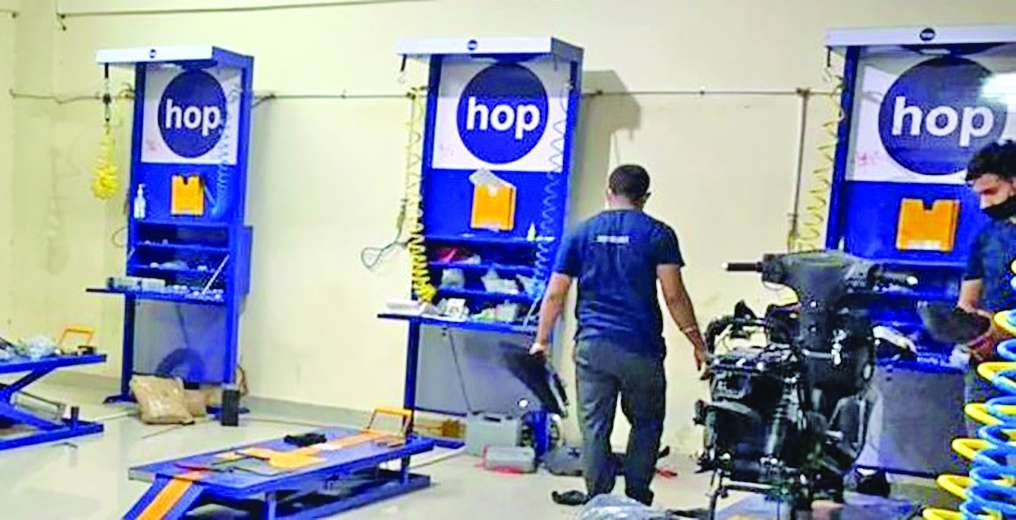
Efficient EV manufacturing 

A skilled and competent workforce is crucial for efficient manufacturing practices in the EV space. The government and private sector should collaborate to design specialised training programs that cater to the specific needs of the EV industry. By nurturing a skilled workforce with expertise in EV manufacturing and technology, India can enhance productivity and maintain high-quality standards in the production process.

Promotion of indigenous EV manufacturers

Supporting and promoting indigenous EV manufacturers is vital to achieving self-reliance. The government can provide incentives to domestic manufacturers, facilitate access to finance and technology, and create a favourable environment for start-ups and established players in the EV industry. These measures will not only boost local manufacturing but also encourage innovation and competition within the sector. 

Increasing EV adoption

The government has introduced various initiatives and schemes to accelerate the adoption of EVs. The ‘Production Linked Incentive’ scheme aims to boost local domestic production, while the ‘Faster Adoption and Manufacturing of Hybrid and Electric Vehicles 2’ (FAME) scheme provides subsidies to enhance EV adoption. These incentives include tax benefits, reduced registration fees, and financial assistance for EV purchases. Moreover, the establishment of a robust charging infrastructure is crucial to allay range anxiety and encourage more people to switch to EVs. Public and private entities should work together to deploy charging stations across the country, making charging convenient and accessible for all EV owners.

Strengthening collaboration

India’s status as the only developing nation in the coveted MSP provides a unique opportunity to secure access to crucial minerals for EV production. The government should actively engage in strategic partnerships with other countries and organisations to ensure a stable supply of essential minerals for battery manufacturing. Additionally, promoting sustainable mining practices can contribute to India’s commitment to environmental responsibility.

Leveraging our lithium reserves

The discovery of substantial lithium reserves at Nagaur, Rajasthan, is a significant milestone for India’s EV industry. Lithium is a critical component in EV batteries, and its availability within the country can reduce dependency on imports and ensure a stable supply of raw materials for battery production. In addition to reducing our import and dependence on other countries for lithium, India will be able to reach their sustainability goals statistically earlier than expected with the help of the reserves found.

Carbon neutrality by 2070

India’s commitment to becoming carbon neutral by 2070 underscores its dedication to environmental sustainability and energy transition. The EV industry offers a greener alternative to conventional internal combustion engine vehicles. By prioritising EV adoption and efficient manufacturing practices, India can significantly contribute to global efforts in mitigating climate change challenges.

Bottom line

As India charts its path towards self-reliance in the EV ecosystem, efficient manufacturing practices are critical to achieving this vision. Leveraging indigenous lithium reserves, localising the supply chain, investing in research and development and promoting skill development are essential to fostering self-sufficiency. The increasing adoption of EVs in the country, supported by government initiatives and commitments, demonstrates the growing understanding and traction among consumers towards electric mobility. As India is the only developing nation in the coveted MSP, it must capitalise on its resources and strengths to emerge as a leader in the global EV market. Thus, by embracing efficient manufacturing practices and sustainable technologies, India can accelerate its journey toward a cleaner, greener and self-reliant future.

Share.
Exit mobile version