


Trending Insights
From Blueprint to Execution: Integrated Development’s Contribution to Project Excellence 5 Steps to Make Sustainable Materials Move from Taboo to Mainstream Eastman Impex Accelerates Growth with ₹40 Cr YOY Annual Investment,  Expands Manufacturing Capabilities and Workforce in Punjab KPCL announces the results for FY26 Strengthening India’s Infrastructure Through Integrated Protection and Repair Solutions The Printer for The Smallest Details India’s Packaging Industry Gears Up as PackPlus 2026 Opens Registrations for Visitors and Exhibitors MIC Electronics Strengthens RailTech Footprint with New Central Railway Mandate for Project Expansion Cleaner Production Standards: Raising the Bar for Industrial Fertilisers Vinfast Launches the All-New Vf MPV 7, A Spacious Electric Seven-Seater for Indian Customers Henkel announces new sustainability targets for 2030 East Coast Railway Awards ₹2.12 Crore Contract to MIC Electronics for Passenger Information System Upgrade IEEMA Launches The 17th Edition of ELECRAMA 2027, The World’s Largest Electrical Show Collaboration Over Competition: How Software and Machine Makers Are Building Connected Manufacturing Ecosystems SWITCH Mobility Completes India’s Largest Electric Bus Export to Mauritius PC-based control for grid stability and efficient energy management QNu Labs Validates Real-World Performance of ARMOS QKD in Independent Global Study with VIAVI Advancing India’s Die & Mould Industry with Mazak’s High-Performance Machining Solutions Emperium Group Leverages Advanced Construction Technologies to Launch ‘Emperium Titan’ on Dwarka Expressway, Gurugram Transforming Textile Workflows with Ergonomic Vacuum Technology InsideFPV Secures and Executes ₹10 Crore Ministry of Defence Contract In Two Months Under EPR for Kamikaze Drones From Knowing Chemistry to Owning Process: India’s Next Industrial Leap India’s Manufacturing Moment: Why Engineering and Component Makers Are Key to Global Competitiveness Solitaire Unveils PTK 362 Pro PTZ Camera  Powerplay Launches India’s First AI Workforce for Construction SiMa.ai Introduces Modalix PCIe HHHL Card, Purpose-Built to Support LLMs for Industrial PCs and Edge Server Physical AI Applications Robotic Material Handling: Transforming the Future of Industrial Operations Zenergize partners with Infineon Technologies to strengthen power-electronics solutions for India’s clean-energy ecosystem Waaree Energies Powers Up as The Main Principal Partner for Rajasthan Royals Eurobond Opens Delhi Flagship Experience Centre, Shifting Architectural Sourcing from Desk Catalogues to Immersive Retail Navigating the Perfect Storm: Challenges Plaguing the Auto Components Sector in 2026 OXMIQ Labs and AM Intelligence Labs Partner to Architect one of the world’s largest renewable-powered AI compute platforms BenQ Introduces RD280UG, a New Standard in Visual Comfort and Focus for Modern Developers Bengaluru Gets a World-Class Electronics Co-Innovation Hub as Henkel Launches Advanced Application Centre Ember Cookware Appoints Amit Singh as Chief of Supply Chain and Services MIC Electronics Achieves Pan-India Railway Milestone with ₹1.53 Crore Multi-Zone ELU Orders LG Electronics India Brings Comprehensive HVAC Ecosystem to ACREX 2026 – Spanning Residential Comfort to Industrial-Scale Cooling Bharat Forge and Liebherr-Aerospace Launch Advanced Landing Gear Machining Facility in Pune FAULHABER BXI: Made for the Next Generation of Robotics Schneider Electric launches ‘One Unit Mission’ to Accelerate India’s Energy Efficiency Movement Why Software-Defined Vehicles Are Transforming Automotive Engineering, Ownership And Mobility Ecosystems Funding the Net-Zero Path: Carbon Capture Utilisation and Storage in Budget 2026 The Value-Centric Shift: How Global Manufacturing is Trading Optimization for Resilience Microscopy 4.0: Powering India’s Deep-Tech & Semiconductor Ambitions Alligator Automations Sets Up New PCMC Office in Pune to Strengthen Engineering and Operations Teams Fans Asked, Mahindra Listened: The BE 6 Batman Edition Returns Women Redefining Manufacturing Beckhoff Facilitates Physical AI Taking Automation to The Next Level With Natural Language NABL Accreditation Explained: What It Means forIndustrial Testing Labs in Bharat The End-to-End Process of Sheet-Metal Fabrication and Galvanising in Construction Supplies From Process Automation to Autonomous Coordination: Reimagining Manufacturing with Collaborative & Agentic AI Engineering Future-Ready Façade Solutions Through Innovation, Compliance & Sustainable Manufacturing Policy, Trade, and Incentives: A Roadmap for Sustaining Manufacturing Employment in India KPIT and IIT Bombay ink MOU to anchor cutting edge research and product development for next-gen mobility SiMa.ai and STIGA S.p.A. Announce Strategic Partnership in Physical AI The ePlane Company Unveils India’s Largest Integrated eVTOL Prototyping and Testing Facility at IIT Madras Discovery Campus University of Warwick’s study reveals Cleaner Solar Manufacturing Could Cut Global Emissions By 8.2 Billion Tonnes By 2035 Kaynes Semicon Announces Strategic Adoption of Synopsys Simulation Software Mitsubishi Electric India hosts 6th ME Cup, Sona College of Technology emerges winner among 35 selected teams Make in India, Hire in Bharat: Manufacturing’s Next Constraint Is Not Capital Precision Engineering Technologies and WFL Join Forces to Accelerate Complete Machining Adoption Across Indian Manufacturing Showcasing the Future of Smart Manufacturing at B&R Innovations Day 2026 Indian Army Successfully validate “Advance 28-ft Heavy Drop System – 20T (Type V)” Configuration Auto Component Manufacturing and the EV Shift: Policy, Investment and Innovation Priorities QVI India Opens New Office and Advanced Demo Centre in Bengaluru Ashok Leyland Plans Big Expansion in Western India WIDIA Turns 100: Defining and Celebrating a Century of Metal Cutting Solutions ACMA Automechanika New Delhi marks a major milestone, attracting 35,750 visitors alongside robust global participation from 870 exhibitors IMTEX FORMING 2026 Asia’s Largest Exhibition on Metal Forming and Manufacturing Technologies Records Consistent Growth in Size and Business Orders Tata Advanced Systems inaugurates helicopter production line for Airbus H125 helicopter to boost India’s vertical-lift capabilities Scaling CAE for High-Volume Manufacturing Environments Sona Comstar Integrating AI, Robotics and Electronics to Build a World-Class Mobility Technology Company: Priya Kapur at India-AI Impact Summit 2026 iCreate Drone Challenge Demo Day Showcases 14 Homegrown Startups Advancing India’s Indigenous Drone Technologies India AI Impact Summit 2026 Commences at Bharat Mandapam with Unprecedented Global Participation LMT Tools India Unveils Nation’s Largest Gear Cutting Tool Plant in Chakan BorgWarner to Supply Variable Turbine Geometry Turbocharger for Major European OEMs’ Hybrid Electric Vehicle Platform MIC Electronics Secures ₹4.45 Crore Orders from Eastern Railway ACMA–BCG Joint Study Highlights Smart Factories as a Key Enabler of India’s Auto Component Growth & Competitiveness CNH India Leads the Mechanization Movement with World-Class Crop Solutions Steelbird International Showcases Automotive Component Portfolio at ACMA Automechanika 2026

India's Leading Magazine For Manufacturing Industries

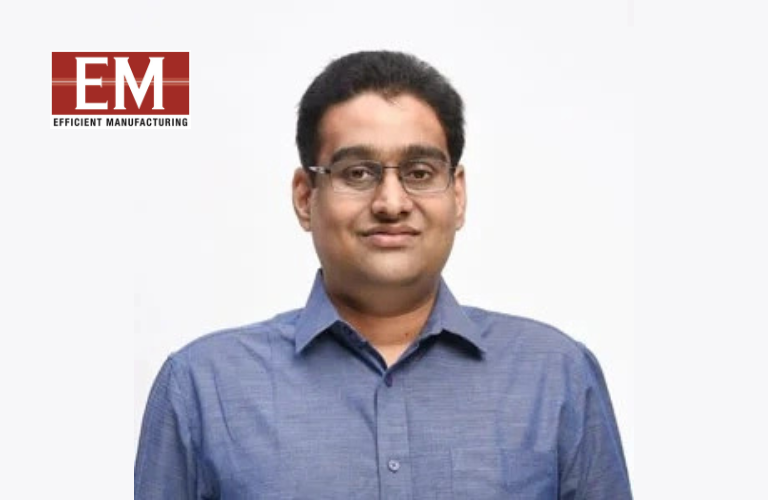
…by Abhishek Jain, Chief Operating Officer, Group Satellite

In the contemporary industrial and technological landscape, the rift between a visionary “blueprint” and its physical or digital “execution” has historically been the graveyard of aspiring projects. Traditional, isolated methodologies where design, engineering and implementation operate as distinct, following phases often suffer from information decay and misalignment. But the appearance of Integrated Development (ID) has redefined the trajectory of project management. By bringing different specialists together from the very start through to the final hand-off, ID drives project quality and makes sure the end result isn’t just a copy of the first draft but a better, more polished version of it.

The Paradigm Shift: Beyond Sequential Silos

We’ve spent decades following the “Waterfall” approach, but it has a major flaw: it’s built on hand-offs. Every time a project moves from a strategist to a builder, the authentic version gets a little more diluted by practical constraints that should have been spotted earlier.

Integrated Development changes that dynamic. It demands that both engineers and stakeholders, from day one, should stop treating projects like a sequence and start treating them as a collaboration. By integrating technical feedback early on, we can avoid the problem of trying to fix major issues once the project is already well underway

Synergy as a Catalyst for Innovation

True project excellence isn’t just about checking boxes on a requirements list; it happens when people with different skill sets actually talk to each other. Integrating development changes the game. The classic tug-of-war between aesthetics and logic stops being a headache and starts acting as a filter for better products. We’re moving past simple compromise and focusing on true collaboration.

Early-Stage Feasibility: By bringing the people who actually build the product into the drafting phase, you catch technical deal breakers early. It is far easier to resolve a blockage on a whiteboard than it is once you’ve committed to physical production or started writing code

Resource Optimisation: Working in sync helps teams spot where they are wasting effort. When everyone is looking at the same data and working toward the same goal, deciding where to put your time and money becomes a calculated move rather than a best guess.

Risk Mitigation: In this model, risk isn’t something you save for a “review phase” at the end of the month. Instead, every department keeps an eye on it in real-time. This shared responsibility makes the whole project tougher and better prepared for unexpected market shifts or technical glitches.

Structural Pillars of Integrated Development

To transition from a conceptual blueprint to a state of execution excellence, certain structural “head pointers” or pillars must be established. These serve as the navigational markers for leadership teams:

Establishing a Single Source of Truth

The real backbone of any integrated project is how the data moves. Whether you are using BIM for a high-rise or DevOps for a new app, the goal is the same: making sure everyone is looking at the exact same information. When everyone from the office architect to the engineer on the ground is looking at the same live data, you don’t have to waste hours on manual updates. It cuts off that frustrating delay between a design tweak and the actual build, so the crew isn’t stuck working from an out-of-date set of plans.

Moving Toward Cross-Functional Governance

Excellence also demands a fundamental shift in how we lead. Integrated development thrives on “T-shaped” professionals who are expert in their specific craft but have the breadth to understand the entire project ecosystem. Administration must follow suit by ditching departmental silos in favour of shared KPIs. When teams are rewarded for the success of the task as a whole rather than just their individual contributions, the motivation shifts from passing the complication to overcoming obstacles collectively.

Prototyping as the Practical Bridge

Finally, the blueprint should never jump straight to full-scale production. Modern integration uses rapid prototyping and “digital twins” to bridge the gap between the abstract and the concrete. Experimenting with small-scale versions of the plan early on lets them break things in a safe environment, helping them catch inaccurate assumptions before they become a major crisis. This collective approach ensures that by the time you reach full-scale accomplishment, the plan isn’t just a theoretical idea- it’s a battle-tested strategy.

The Human Element: Cultural Integration

Perhaps the most overlooked pointer is the psychological alignment of the team. Integrated development fails if there is a cultural divide between “the thinkers” and “the doers.” Project excellence is achieved when the execution team feels ownership of the blueprint, and the design team understands the rigours of the field.

Redefining Quality Through the Lens of Integration:

In a traditional framework, “quality” is often checked at the end of a final inspection to see if the product matches the plan. In Integrated Development, quality is inherent in the process. Because execution feedback is constantly being piped back into the development cycle, the project undergoes a continuous process of self-correction.

The result is a finished product that actually turns out better than the original plan. Instead of letting build-site constraints derail the project, the team uses them to improve the design. For example, finding a structural limit mid-build might push the team toward a more sustainable material they hadn’t thought of before, ultimately making the final project even better than the first draft

The Economic Imperative

It’s not just about quality, though. Integrated Development actually saves money. Data consistently shows that these projects have way fewer change orders, which are usually the main reason budgets blow out and deadlines get missed. By investing more intellectual capital at the “Blueprint” stage and maintaining integration through “Execution,” organisations can achieve a higher Return on Investment (ROI). The initial cost of complex integration is rapidly offset by the elimination of waste and the acceleration of the time-to-market.

Conclusion: The Future of Excellence

The transition from a blueprint to a finished product is where most projects succeed or fail. The old way of working in isolated departments just doesn’t hold up in a world this complex. ID changes that by connecting every phase of the process, ensuring the final result stays true to the initial idea while adapting to real-world challenges.

Project excellence, therefore, is not a destination but the result of a perfectly synchronised journey. By adopting Integrated Development, leaders ensure that their blueprints are not just dreams on paper, but the DNA of a flawlessly executed reality. As we move forward, the most successful entities will be those who realise that the blueprint and the execution are two sides of the same coin, inseparable and mutually dependent on the path to perfection.

Share.
Exit mobile version