



Trending Insights
From Knowing Chemistry to Owning Process: India’s Next Industrial Leap India’s Manufacturing Moment: Why Engineering and Component Makers Are Key to Global Competitiveness Solitaire Unveils PTK 362 Pro PTZ Camera  Powerplay Launches India’s First AI Workforce for Construction SiMa.ai Introduces Modalix PCIe HHHL Card, Purpose-Built to Support LLMs for Industrial PCs and Edge Server Physical AI Applications Robotic Material Handling: Transforming the Future of Industrial Operations Zenergize partners with Infineon Technologies to strengthen power-electronics solutions for India’s clean-energy ecosystem Waaree Energies Powers Up as The Main Principal Partner for Rajasthan Royals Eurobond Opens Delhi Flagship Experience Centre, Shifting Architectural Sourcing from Desk Catalogues to Immersive Retail Navigating the Perfect Storm: Challenges Plaguing the Auto Components Sector in 2026 OXMIQ Labs and AM Intelligence Labs Partner to Architect one of the world’s largest renewable-powered AI compute platforms BenQ Introduces RD280UG, a New Standard in Visual Comfort and Focus for Modern Developers Bengaluru Gets a World-Class Electronics Co-Innovation Hub as Henkel Launches Advanced Application Centre Ember Cookware Appoints Amit Singh as Chief of Supply Chain and Services MIC Electronics Achieves Pan-India Railway Milestone with ₹1.53 Crore Multi-Zone ELU Orders LG Electronics India Brings Comprehensive HVAC Ecosystem to ACREX 2026 – Spanning Residential Comfort to Industrial-Scale Cooling Bharat Forge and Liebherr-Aerospace Launch Advanced Landing Gear Machining Facility in Pune FAULHABER BXI: Made for the Next Generation of Robotics Schneider Electric launches ‘One Unit Mission’ to Accelerate India’s Energy Efficiency Movement Why Software-Defined Vehicles Are Transforming Automotive Engineering, Ownership And Mobility Ecosystems Funding the Net-Zero Path: Carbon Capture Utilisation and Storage in Budget 2026 The Value-Centric Shift: How Global Manufacturing is Trading Optimization for Resilience Microscopy 4.0: Powering India’s Deep-Tech & Semiconductor Ambitions Alligator Automations Sets Up New PCMC Office in Pune to Strengthen Engineering and Operations Teams Fans Asked, Mahindra Listened: The BE 6 Batman Edition Returns Women Redefining Manufacturing Beckhoff Facilitates Physical AI Taking Automation to The Next Level With Natural Language NABL Accreditation Explained: What It Means forIndustrial Testing Labs in Bharat The End-to-End Process of Sheet-Metal Fabrication and Galvanising in Construction Supplies From Process Automation to Autonomous Coordination: Reimagining Manufacturing with Collaborative & Agentic AI Engineering Future-Ready Façade Solutions Through Innovation, Compliance & Sustainable Manufacturing Policy, Trade, and Incentives: A Roadmap for Sustaining Manufacturing Employment in India KPIT and IIT Bombay ink MOU to anchor cutting edge research and product development for next-gen mobility SiMa.ai and STIGA S.p.A. Announce Strategic Partnership in Physical AI The ePlane Company Unveils India’s Largest Integrated eVTOL Prototyping and Testing Facility at IIT Madras Discovery Campus University of Warwick’s study reveals Cleaner Solar Manufacturing Could Cut Global Emissions By 8.2 Billion Tonnes By 2035 Kaynes Semicon Announces Strategic Adoption of Synopsys Simulation Software Mitsubishi Electric India hosts 6th ME Cup, Sona College of Technology emerges winner among 35 selected teams Make in India, Hire in Bharat: Manufacturing’s Next Constraint Is Not Capital Precision Engineering Technologies and WFL Join Forces to Accelerate Complete Machining Adoption Across Indian Manufacturing Showcasing the Future of Smart Manufacturing at B&R Innovations Day 2026 Indian Army Successfully validate “Advance 28-ft Heavy Drop System – 20T (Type V)” Configuration Auto Component Manufacturing and the EV Shift: Policy, Investment and Innovation Priorities QVI India Opens New Office and Advanced Demo Centre in Bengaluru Ashok Leyland Plans Big Expansion in Western India WIDIA Turns 100: Defining and Celebrating a Century of Metal Cutting Solutions ACMA Automechanika New Delhi marks a major milestone, attracting 35,750 visitors alongside robust global participation from 870 exhibitors IMTEX FORMING 2026 Asia’s Largest Exhibition on Metal Forming and Manufacturing Technologies Records Consistent Growth in Size and Business Orders Tata Advanced Systems inaugurates helicopter production line for Airbus H125 helicopter to boost India’s vertical-lift capabilities Scaling CAE for High-Volume Manufacturing Environments Sona Comstar Integrating AI, Robotics and Electronics to Build a World-Class Mobility Technology Company: Priya Kapur at India-AI Impact Summit 2026 iCreate Drone Challenge Demo Day Showcases 14 Homegrown Startups Advancing India’s Indigenous Drone Technologies India AI Impact Summit 2026 Commences at Bharat Mandapam with Unprecedented Global Participation LMT Tools India Unveils Nation’s Largest Gear Cutting Tool Plant in Chakan BorgWarner to Supply Variable Turbine Geometry Turbocharger for Major European OEMs’ Hybrid Electric Vehicle Platform MIC Electronics Secures ₹4.45 Crore Orders from Eastern Railway ACMA–BCG Joint Study Highlights Smart Factories as a Key Enabler of India’s Auto Component Growth & Competitiveness CNH India Leads the Mechanization Movement with World-Class Crop Solutions Steelbird International Showcases Automotive Component Portfolio at ACMA Automechanika 2026 RODIM Launches R-Star Advanced Paint Protection Film at Automechanika 2026 Synopsys to Showcase AI-Driven Engineering Innovation at India AI Impact Summit 2026 Adhesive Dispensing in Automotive Body Shops: Driving Safety, Efficiency, and Durability MAHLE HeatX Range+ for More Range in Winter RIR Power Electronics Limited appoints N Ramesh Kumar as Managing Director and Chief Executive Officer Euler Motors and Jio-bp partner to accelerate EV charging infrastructure for commercial electric vehicles in India ACMA welcomes the India–US Trade Interim Agreement Framework Hindustan Zinc and Jawaharlal Nehru Centre for Advanced Scientific Research Advance Zinc-Ion Battery Technology for Large-Scale Energy Storage Cobots for Precision Manufacturing ACMA Automechanika New Delhi 2026 opens, spotlighting India’s global aftermarket ambitions Addverb Unveils Elixis-W, Its First Wheeled Humanoid, and Advanced Intralogistics Solutions at LogiMAT India 2026 How India Is Building Its Semiconductor Future Enabling India’s NextChapter in Sustainable, High-Performance Manufacturing Mahindra bags its biggest ever export order; 35,000 units of LCVs to be delivered to Agrinas Pangan Nusantara, Indonesia in 2026 Manufacturing the Future: Reforms, Technology, and the Road to Viksit Bharat 2047 Landmark US-India Trade Deal Eases Tariffs, Opens New Opportunities for Indian Industry SIAM Hosts 20th Styling & Design Conclave and 18th Automotive Design Challenge LSKB Aluminium Foils and JUPALCO Host Global Aluminium Foil Industry Leaders at Sonipat Facility During GLAFCO 2026 Budget 2026 Signals a Manufacturing-Led Growth Push Across Strategic Sectors Union Budget 2026: Manufacturing Industry Sets Its Expectations Customisable E-Rickshaws: The Rising Trend in Commercial Mobility

India's Leading Magazine For Manufacturing Industries

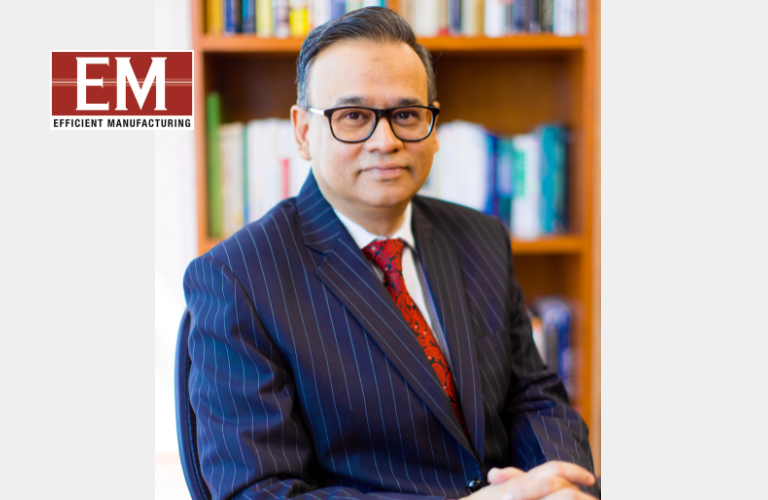
…by Athar Shahab, Managing Director at Zuari Industries

In the classroom, chemistry is reassuringly simple. Acids donate protons, bases accept them, and predictable salts are formed. Sulphur burns, transforms into sulphur trioxide, and emerges as sulphuric acid at the end of a neat, balanced equation. The lesson is elegant and universal: if you understand the reaction, you can reproduce the result.

That belief collapses the moment one steps onto a factory floor.

In the real world, the chemical reaction itself is often the least valuable part of the system. What matters is the process. And process is where industrial power resides.

Take sulphuric acid, the “king of chemicals.” Every engineering student knows how it is made. Yet, producing it at an industrial scale requires precise, unforgiving control over temperature, gas purity, catalyst performance, and corrosion management. The chemistry is public domain. The ability to execute it reliably, safely, and economically is not. That capability is built, refined, and fiercely protected over decades.

This is the central truth that India’s manufacturing sector must now confront.

Across modern industry, value has aggressively shifted away from knowing what reacts to knowing how to make it work at scale. Catalysts, reactor designs, operating conditions, and degradation management form the real intellectual property (IP) of the chemical and material world. These are rarely transferred in full. They are licensed, bundled, restricted, and continuously upgraded.

The consequence for India is a deep, structural dependency.

We understand the chemistry. We have a formidable engineering workforce and one of the world’s fastest-growing markets. Yet, we continue to pay for process licenses, import catalysts, and operate within technical frameworks defined elsewhere. The knowledge exists domestically, but the control does not.

The scale of this dependence is staggering. India’s payments for the use of intellectual property run into tens of billions of dollars annually. Catalysts alone represent a billion-dollar-plus domestic market. Behind these numbers lies a stark reality: we are paying recurring rents for capabilities that we are fully capable of developing ourselves.

To be clear, this is not a critique of global trade. IP systems are legitimate and necessary. The issue is our strategic posture. No major industrial power has built itself by remaining a perpetual licensee.

However, the default to licensing is rarely due to a lack of ambition among Indian industrialists; it is driven by the brutal economics of risk. Building a First-of-a-Kind (FOAK) industrial plant using an unproven domestic process carries massive financial exposure. For a corporate board, paying for a proven European or American license is a necessary de-risking strategy to guarantee yield.

Breaking this cycle requires a fundamental shift in national priorities, backed by a framework that underwrites this risk.

First, we must exercise strategic selectivity. India cannot, and should not, attempt to reinvent the wheel on legacy petrochemical processes where global incumbents have a century-long head start. Instead, our intent must be directed at the next generation of industry. As the world navigates the energy transition, owning the process technologies for advanced bio-based fuels, green hydrogen electrolysis, battery precursor refining, and next-generation energy molecules is where the real strategic leap lies.

Second, we must bridge the “missing middle.” We have invested in laboratory chemistry, but we must now invest in scale-up. Pilot plants, demonstration facilities, and industrial testbeds are the weakest links in our innovation ecosystem. Too many ideas remain confined to beakers because the infrastructure to translate them into continuous operating processes is inadequate. International models offer clear blueprints: Germany’s Fraunhofer institutes and the Netherlands’ TNO operate as public-private engines specifically designed to move ideas from concept to commercial reality. India urgently needs its own version of this architecture.

Third, process capability requires “patient capital.” Traditional financing mechanisms in India are often geared toward software-like returns – quick scaling with low capital expenditure. Process engineering is fundamentally different. It is capital-intensive and requires longer gestation periods. Government policy and institutional financing must align to support early-stage scale-up and FOAK deployments, where the technical and financial risks are at their peak.

Finally, catalysis must become a national mission. Catalysts determine yields, energy efficiency, and environmental performance. Control over catalysts translates directly into control over the process itself. Developing indigenous catalyst technologies is not optional; it is foundational to industrial autonomy.

None of this will be easy. Building process capability demands patience in a system that habitually seeks quick returns.

But the alternative is clear. A continued reliance on imported processes will lock India into a cycle where value is consistently transferred outward. In a world where supply chains are increasingly weaponised and technological control is a geopolitical tool, being a perpetual tenant is a vulnerable position.

High-school chemistry teaches us that reactions are universal. Industrial reality teaches us that outcomes are not. India stands at an inflection point. The talent exists. The market exists. We must decide whether we will remain mere participants in processes designed elsewhere, or become the creators of our own industrial future.

We cannot continue to rent the future. We must build it.

Share.
Exit mobile version