










| Recognising the environmental and societal challenges for our economy, many organisations and governments worldwide are advocating a transition towards maintaining a circular economy. The Cover Story discusses how circular economy model provides tools and methodologies in response to environmental and societal challenges facing our economy.
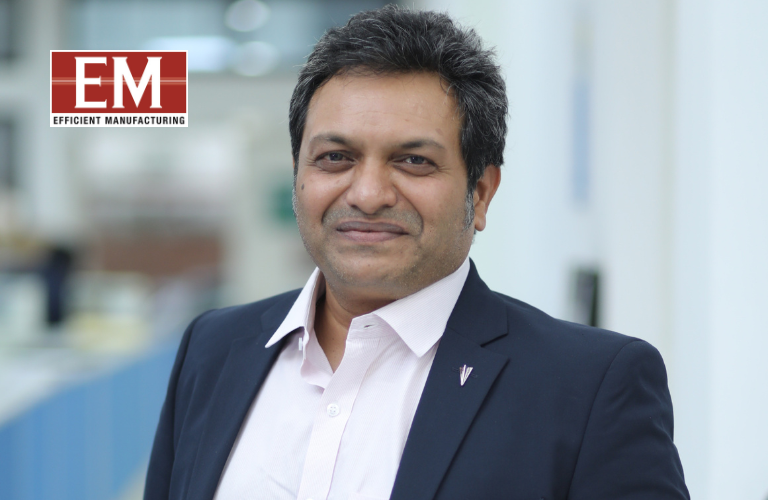
Rohit Pandey, Sr Manager, International Business & Lead, ESG, Commtel Networks
What exactly is the circular economy? Simply put, it is an economic model designed to eliminate waste and continually use resources. It emphasises moving from the traditional ‘take-make-waste’ pattern to a more sustainable ‘reduce–reuse– recycle’ approach. This shift not only helps alleviate the burden on our planet but also offers new business opportunities and potential for economic growth.
The social and environmental effects of climate change highlight the need for organisations to reconsider their business strategies. The circular economy stands as a beacon in this new landscape, offering tools and methodologies that can reshape our future. ESG (Environmental Social Governance) professionals have an essential role in this transition. Through their influence, they can promote the principles of the circular economy, ensuring businesses adopt sustainable and responsible practices.
The directives given by the international bodies further emphasise the importance of adopting this model. The pivotal message from these directives is clear: businesses should prioritise sustainability. They should not view it as a mere compliance measure but as a strategy for long-term growth and risk mitigation.
Three pillars of the circular economy
(a) Design out waste and pollution: Sustainability’s roots lie in the design phase. It is here that products are conceived with an emphasis on durability, recyclability and minimal wastage. This approach mandates businesses to invest heavily in research and development, explore eco-friendly materials and employ digital innovations, such as Artificial Intelligence (AI), to achieve design precision.
(b) Keep products and materials in use: This pillar harmonises with the ethos of product longevity. The evolving market dynamics, where brands increasingly opt for leasing over outright selling, signifies a transition from ownership to usership. Such transformations also facilitate avenues for product refurbishment and re-manufacturing.
(c) Regenerate natural systems: The focus transcends recycling; it’s about rejuvenating ecosystems. This vision encompasses initiatives ranging from habitat restoration to afforestation drives and innovative agricultural techniques that bolster soil health and biodiversity.
Real-world case studies
1. Philips: The brand has seamlessly transitioned to offering products-as-a-service across diverse sectors. For example, they lease lighting solutions to business clientele, ensuring maintenance and upgrades, when necessary, thus promoting waste reduction and efficiency.
2. Dell: Embracing a closed-loop gold recycling program, Dell reclaims gold from used electronics for new computer motherboards and integrates recycled plastics into its products.
3. Nike: Through its ‘Reuse-A-Shoe’ initiative, Nike recycles worn-out athletic shoes, repurposing them for materials in sports surfaces like running tracks. Furthermore, they are spearheading designs using unified, recyclable materials.
4. H&M: With its “Conscious Collection”, H&M champions sustainable fashion, introducing initiatives to recycle old clothing and produce new garments from the recycled fibres.
5. TerraCycle: This ground-breaking company has specialised in recycling traditionally ‘unrecyclable’ waste. Collaborating with various businesses, they have developed recycling systems for an array of products, from cigarette butts to toothbrushes.
6. Interface: As a modular carpet manufacturer, Interface had set forth a mission to reach a zero environmental footprint by 2020, which they were able to achieve even before the set timeline. They continue to make efforts in this direction and influence others across the world to create change within their communities. Their strategy incorporates recycled and bio-based materials in products and introduces programs to reclaim old carpets for recycling.
7. Ecover: Renowned for its cleaning and laundry products, Ecover has championed refill stations to curtail plastic bottle usage and is pioneering the adoption of bio-based plastics and other sustainable packaging alternatives.
8. Loop: In a strategic partnership with TerraCycle, Loop offers popular products in reusable packaging. Customers return empty containers, which Loop then sanitises and refills, establishing a waste-free system for diverse products.
9. RentoMojo: This innovative Indian start-up is at the forefront of the furniture and appliance rental space, advocating the concept of leasing over owning.
10. Neste: Hailing from Finland, Neste has emerged as a global leader in crafting renewable diesel and jet fuel derived from waste and residues.
Directives and regulations
1. European Union (EU):
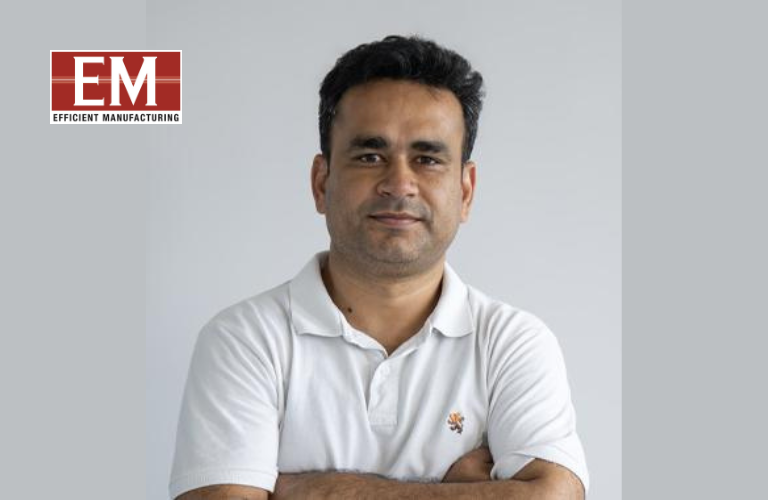
Rohit Pandey, Sr Manager, International Business & Lead, ESG, Commtel Networks


(i) Circular Economy Action Plan: As a component of the European Green Deal, this plan was inaugurated in 2020 to address challenges across product lifecycles, ranging from design to consumption and waste management.
(ii) Waste Framework Directive (2008/98/EC): This directive provides foundational concepts and definitions pertaining to waste management, such as recycling and recovery.
(iii) EU Ecodesign Directive (2009/125/EC): Establishing a framework, this directive sets forth eco-design requirements for energy-related products.
2. Netherlands: Circular Economy Implementation Program: Launched in 2016, this programme aspires to transition the Dutch economy to a fully circular model by 2050.
3. China: Circular Economy Promotion Law (2008): This legislation serves as China’s legal framework, advocating the circular economy across various scales, from individual businesses to entire regions.
4. France: Anti-Waste for a Circular Economy Law (2020): Encompassing measures that promote waste reduction, reuse, recycling and combat planned obsolescence.
5. Finland: Finland’s Roadmap to a Circular Economy (2016): A guiding document emphasising sustainable product design, production and consumption, with the ambition of establishing Finland as a leader in the circular economy by 2025.
6. Chile: National Strategy for a Circular Economy: Introduced in 2020, this strategy is dedicated to fostering sustainable consumption and production patterns by 2040.
7. Japan: Fundamental Law for Establishing a Sound Material-Cycle Society (2000): This piece of legislation emphasises waste reduction, promotion of recycling and ensuring proper waste treatment processes.
8. South Korea: Act on the Promotion of Saving and Recycling of Resources (2008): This act is designed to encourage resource conservation and recycling, with the ultimate goal of minimising waste generation.
9. India: National Resource Efficiency Policy (Draft, 2019): This policy framework aims to champion resource efficiency and the principles of the circular economy as avenues to sustainable development.
10. Canada: Canada-Wide Strategy on Zero Plastic Waste (2018): While part of a broader initiative to reduce waste and stimulate a circular economy, this strategy focuses particularly on addressing the challenges posed by plastic waste.
The pivotal message from these directives and regulations is the collaborative spirit demonstrated when governments, businesses and communities unite. The examples provided underscore both the inspiration and a pragmatic blueprint for other nations aspiring to make strides in the realm of the circular economy.
Benefits of the circular economy:
(a) Environmental: Imagine a world with diminished landfills and seas free of plastic. Circularity can make this a reality by slashing the need for fresh resource extraction, thereby diminishing environmental trauma like deforestation and mining. This cascades into reduced carbon footprints, nurturing our planet back to health.
(b) Economic: The circular economy can be an elixir for businesses, offering cost predictability against the mercurial nature of raw material prices. Furthermore, models like ‘product-as-a-service’ guarantee steady revenue flows, bolstering economic tenacity.
(c) Social: The alignment of the circular economy with societal wellness is palpable. It heralds the dawn of green employment opportunities, assures equitable economic progression and serves as a buffer against the socio-environmental repercussions of climate change.
Challenges and roadblocks:
• Scale of transition: While neoteric ventures can nimbly adapt to circular models, legacy enterprises grapple with revamping entrenched systems.
• Consumer mindset: We are entrenched in a culture that idolises the ‘brand-new’. To usher in circularity, it’s imperative to recalibrate consumer psyche.
• Regulatory frameworks: A lacuna exists between existing legal canons and circular principles. The need of the hour is robust advocacy and a legislative facelift to nurture circularity.
Technology and innovation’s roles
Technology acts as a force multiplier. IoT devices can monitor product wear and tear, suggesting timely maintenance, prolonging product life. AI can aid in efficient resource allocation, minimising waste. Blockchain promises transparency, ensuring that every stakeholder in the supply chain adheres to sustainability norms. Biotechnologies are unveiling breakthroughs—from bio-degradable plastics to lab-grown meats, challenging traditional production paradigms. For ESG stakeholders, leveraging these technologies can elevate their sustainability metrics.
Transitioning to a circular model:
The transition from the linear ‘take-make-waste’ model to a circular economy is pivotal for industries aiming to minimise environmental impact and promote sustainability. Let’s delve deeper into the integration of AI, ML, Digitalisation and the ‘7Rs’ in th manufacturing sector:
1. Rethink: Before initiating the manufacturing process, companies can use AI and ML algorithms to analyse historical data and forecast demandmore accurately. This allows for better allocation of resources, preventing overproduction and subsequent wastage.
2. Re-design: Digital twin technology, a virtual replica of a physical product, allows manufacturers to test and optimise designs in a digital space. This reduces material waste and ensures the product is designed for longevity and ease of repair or disassembly.
3. Re-purpose: AI can assist in identifying ways to use retired products or parts in new applications, increasing their lifespan and reducing the need for virgin materials.
4. Repair: Predictive Maintenance, powered by ML, can alert manufacturers and users to parts that need repairing before they fail. This extends product lifetimes and reduces the waste associated with discarded broken items.
5. Re-manufacture: Advanced sensors and IoT devices can provide data on the wear and tear of products. This data can be analysed to determine the optimal time to remanufacture a product, ensuring that it serves for as long as possible.
6. Recycle: ML can aid in sorting recyclables more efficiently. In electronic waste recycling, for example, machine learning algorithms can classify and separate components to recover valuable materials.
7. Recover: AI and digitalisation can help in tracking products throughout their lifecycle. This ensures that, at the end of life, materials are recovered efficiently and either reused or disposed of in an environmentally friendly manner.
Additionally, the shift towards a circular economy strengthens the ‘Product-as-a-Service’ (PaaS) trend. Instead of selling products, companies lease them out, retaining ownership and responsibility for their maintenance, repair and eventual recycling. This model ensures that products are used to their fullest potential and are taken back at the end of their lifecycle for proper recycling or disposal.
Benefits
• Cost-efficiency: Properly implemented AI and ML solutions can result in significant cost savings, as they optimise resource allocation, reduce waste and prolong product lifespans.
• Environmental impact: A circular approach drastically reduces waste, emissions and the depletion of finite resources.
• Customer relations: Customers are more likely to support and remain loyal to companies that prioritise sustainability.
• Regulatory compliance: Many governments around the world are implementing stricter environmental regulations.
• Innovation: The challenges posed by transitioning to a circular economy drive innovation, leading to the development of new business models.
In summary, integrating AI, ML and digitalisation with the principles of the circular economy offers a strategic approach for manufacturers to ensure sustainability, improve efficiency and meet the demands of a changing global landscape. Consumer behaviour is both a challenge and a catalyst. A conscious consumer, by repairing, reusing and recycling, embeds circularity in daily life.
Conclusion
The symbiosis of ESG and the circular economy holds the promise of a sustainable future. Projections indicate an increasing number of businesses transitioning, driven by both environmental necessity and economic viability. Collaborative endeavours, where businesses across sectors share resources, are expected to gain traction. Policymakers, recognising the socio-economic benefits, are likely to introduce regulations promoting circularity.
The circular economy is not just a trend; it is a pressing necessity. ESG professionals have a unique opportunity to pioneer this change, using the circular economy as a tool to enhance their impact across all fronts. By intertwining business success with environmental stewardship and societal well-being, we are charting a path for a balanced and prosperous future. Now is the moment to act, and the circular economy is our roadmap.


