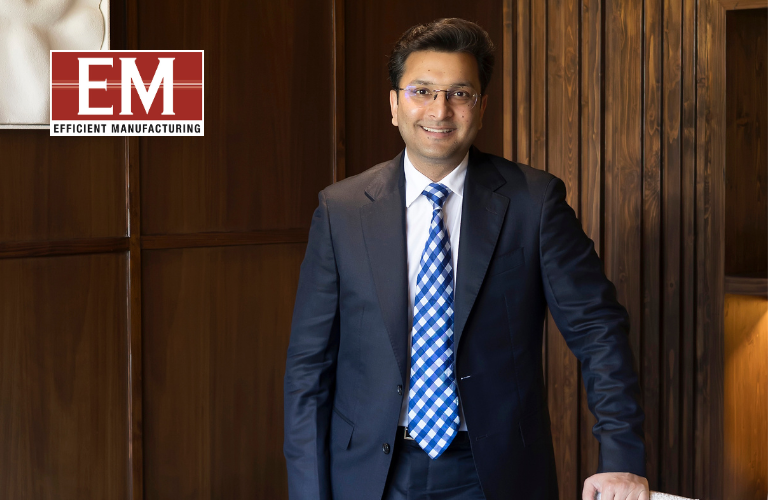


….by Gaurav Singal, CEO, Eastman IMPEX
High-risk manufacturing environments ranging from heavy machinery plants and metal fabrication units to chemical processing facilities are synonymous with precision, speed, and efficiency. Yet, they also carry inherent dangers: exposure to hazardous materials, high-pressure operations, extreme temperatures, and complex machine-human interactions. Despite decades of industrial evolution, workplace accidents remain a pressing concern, often leading to not just economic losses but irreversible human consequences.
In recent years, Artificial Intelligence (AI) has emerged as a transformative force across industries. Its application in safety protocols is proving to be a game-changer, particularly for sectors where risk is inseparable from operations. AI-driven safety systems are not only detecting hazards faster but also predicting and preventing them before they manifest, thus redefining the traditional approach to workplace safety.
The Traditional Safety Paradigm – Limitations and Gaps
Historically, safety in manufacturing environments has relied heavily on human vigilance and standardised protocols. From mandatory protective gear to periodic training sessions and routine equipment checks, the focus has been on creating a framework of compliance. While effective to an extent, this model has notable limitations:
- Reactive Nature: Traditional systems respond after an incident has already occurred such as alarms after a machine malfunction or fire suppression after ignition.
- Human Dependency: Even the most well-trained workforce is prone to fatigue, error, and complacency, particularly in high-intensity production lines.
- Limited Data Utilisation: Safety logs and incident records are often underused, stored for compliance rather than actively mined for predictive insights.
- Scalability Challenges: As manufacturing processes become more complex, manual oversight cannot keep pace with the sheer volume of data and variables involved.
These gaps underline the urgent need for an intelligent, proactive, and adaptive safety infrastructure precisely where AI enters the picture.
AI as the Sentinel of Modern Manufacturing Safety
AI’s strength lies in its ability to process massive volumes of real-time data, identify patterns invisible to the human eye, and act autonomously or semi-autonomously in milliseconds. In high-risk manufacturing environments, this translates to a multidimensional safety net encompassing predictive maintenance, anomaly detection, worker monitoring, and emergency response.
Some of the most impactful applications include:
- Predictive Hazard Detection
AI models trained on historical data can forecast potential risks such as a likelihood of equipment overheating, structural fatigue, or toxic gas leaks. For example, vibration sensors integrated with AI can detect anomalies in machinery performance days before an actual breakdown, allowing preemptive repairs. - Computer Vision for Worker Safety
Advanced image recognition systems powered by AI-enabled cameras can monitor work floors in real time. They can identify if a worker is not wearing protective equipment, has entered a restricted zone, or is in unsafe proximity to heavy machinery. Unlike human supervisors, these systems never tire and can monitor multiple zones simultaneously. - Digital Twins and Simulation Models
Digital twinsvirtual replicas of physical environments allow manufacturers to simulate hazardous scenarios using AI. By running “what-if” analyses, companies can predict the outcomes of equipment failures, chemical reactions, or human errors, and refine safety protocols accordingly. - AI-Powered Robotics in Hazardous Zones
In environments with extreme heat, radiation, or toxic exposure, AI-enabled robotic systems can replace human presence. These robots are capable of performing inspections, repairs, and routine tasks while continuously learning and improving through AI algorithms. - Wearable Safety Devices
Smart helmets, gloves, and vests embedded with sensors track worker vitals, posture, and movement. AI interprets this data to detect fatigue, stress, or unsafe physical conditions. Real-time alerts can prevent accidents caused by human exhaustion or distraction.
Industry Case Studies and Global Adoption
Globally, several industries have begun integrating AI into safety frameworks with promising outcomes:
- Oil & Gas: Companies employ AI-powered drones to inspect pipelines and offshore rigs, reducing human exposure to hazardous conditions. Predictive AI also helps anticipate leaks or corrosion risks.
- Automotive Manufacturing: Computer vision is widely used on assembly lines to ensure worker compliance with safety gear protocols.
- Metallurgical Plants: AI-driven predictive models monitor furnace operations, flagging temperature spikes that could lead to catastrophic failures.
- Chemical Processing Units: Digital twins simulate chemical interactions, ensuring that process changes do not inadvertently compromise worker safety.
These examples highlight the versatility and universality of AI’s role in risk mitigation.
The Human-AI Collaboration in Safety
It is critical to understand that AI is not replacing humans in safety oversight but augmenting their capabilities. Human intuition, contextual judgment, and experience remain irreplaceable. AI’s role is to extend human vigilance, offering 24/7 monitoring, data-backed predictions, and swift automated responses.
For instance, when a predictive AI model signals a potential chemical leak, it is the human decision-maker who determines the scale of intervention whether to shut down operations, evacuate personnel, or deploy containment measures. The collaboration of human expertise and AI’s analytical power creates a balanced safety ecosystem.
Implementation Challenges and Ethical Considerations
Despite its promise, AI-enabled safety in manufacturing environments comes with its own set of challenges:
- Data Dependency: AI systems require massive volumes of high-quality data. Inaccurate or incomplete datasets can lead to flawed predictions.
- Integration with Legacy Systems: Many manufacturing plants still rely on outdated machinery, making seamless AI integration difficult and costly.
- Cybersecurity Risks: As AI systems connect to industrial IoT devices, they become potential targets for cyberattacks, which could compromise not only data but also physical safety.
- Worker Resistance: Employees may view AI monitoring as intrusive or fear job losses. Addressing these concerns through transparent communication is essential.
- Ethical Use of AI: Companies must ensure AI does not prioritise productivity over human well-being. Safety AI systems should be designed with a “human-first” ethos.
Towards Zero-Incident Manufacturing
Looking ahead, the integration of AI into safety protocols will only deepen, driven by advancements in machine learning, edge computing, and real-time analytics. Some emerging possibilities include:
- Self-Healing Machinery: AI systems capable of initiating automated corrective actions in machines without human intervention.
- Proactive Compliance Systems: AI tools that automatically generate compliance reports and audit trails for regulatory bodies.
- Emotion AI in Worker Safety: Advanced wearables could track not just physical but also emotional stress, ensuring a holistic safety net.
- Collaborative AI Ecosystems: Industry-wide data sharing could enable cross-learning from safety incidents across companies and geographies.
The vision is clear: a “zero-incident” manufacturing ecosystem where safety becomes predictive, personalised, and proactive rather than reactive.
Conclusion
Safety in high-risk manufacturing environments can no longer be left to chance or outdated compliance frameworks. AI has proven its ability to detect, predict, and prevent hazards in real time, offering a transformative leap in how industries protect their most valuable asset, their people.
As manufacturing enters an era of increasing complexity, AI-enabled safety protocols will be indispensable. The future belongs to organisations that embrace this synergy of human expertise and intelligent systems, creating workplaces that are not just productive but fundamentally safe. At Eastman IMPEX, we firmly believe that integrating AI into our operations is not just about technological advancement, it is about upholding a deeper responsibility towards our workforce, stakeholders, and society at large. Safety is not a cost; it is an investment in human dignity and long-term resilience.