





| ‘Microfactory’, coined in Japan in 1990, has been employed effectively by many enterprises globally over the past three decades. Today, it has evolved into a commercially viable substitute for traditional manufacturing. However, as the name is still not widely accepted, numerous industrial technologies are referred to as microfactories. This Cover Story defines every aspect of such microfactories. A read on…
The idea of a microfactory is not standard. It is a manufacturing term with a broad definition. It is a manufacturing, assembly, or production facility that produces small quantities of goods in a space that is more compact than conventional factories. To maximise capacity and quality while lowering costs through minimal investment and operational manpower, microfactories are often highly automated and robotised.
The key benefits of the microfactory are the enormous resource savings in terms of time, space, energy, and materials. They require less equipment and capacity than traditional factories, reducing initial investment, rampup time, and operational costs radically.
Because of their decreased dimensions, most microfactories are used for small-batch manufacturers of a wide range of items rather than conventional mass production. The manufactured goods often have a tiny form factor and are light in weight.
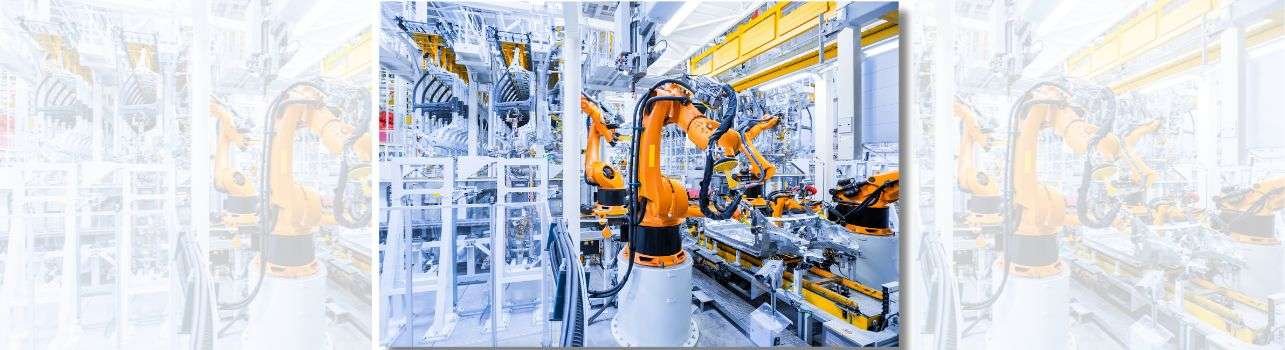
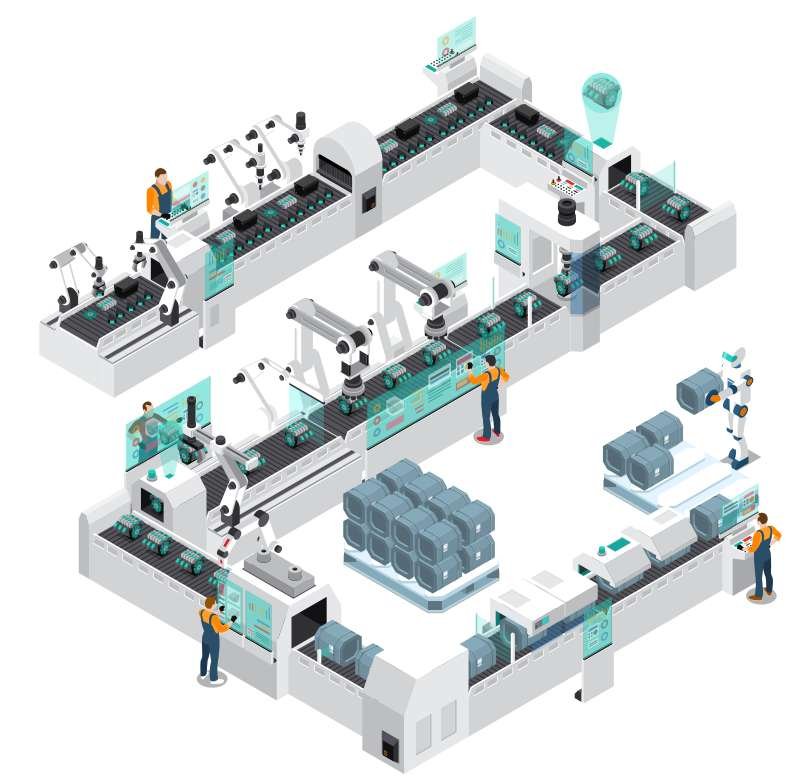
Automatic machine tools, CNC tools, robotic arms, assembly systems, quality inspection systems, material feeders, guides, waste elimination and collection systems, packaging and marking applications, and solutions for monitoring tool performance are just a few features that make up microfactory configurations.
Birth of the Microfactory concept
The Mechanical Engineer Laboratory (MEL) of Japan initially introduced the idea of a Microfactory in 1990. After that, MEL spent almost a decade working on a project to reduce the size of manufacturing systems and machine tools. In 1996, MEL created a micro lathe no larger than a human palm.
This prompted MEL to develop a working prototype of a complete manufacturing facility, which ultimately led to the development of the first desktop fabrication machine for the manufacturing of microball bearings in 1999.

Microfactory vs Conventional Manufacturing Model
Traditional factories and microfactories are founded on fundamentally different ideas. To achieve economies of scale and mass production, the traditional manufacturing idea promotes the construction of a sizable facility. Yet, to make items available to customers, this model requires an extensive and expensive distribution network.
Microfactory, on the other hand, challenges this idea by establishing numerous tiny, high-tech manufacturing facilities nearby clients, which can serve as retail establishments offering a personalised product. The sales approaches used by these two models also differ from one another. Unlike the Microfactory concept, which manufactures products only after receiving confirmed orders from the customer, which creates a pull from the market, the traditional manufacturing model first produces products in large quantities before pushing them to the market through various distribution channels.
Uniform design vs customised design
As items are produced conventionally for mass manufacturing, any modifications to the product’s design result in a considerable increase in the cost of replacing dies and tooling. A typical Microfactory system is exceedingly adaptable, allowing for the cost-free or extremely low-cost adjustment of product design. Microfactories are perfect for producing items in small numbers with various designs and specifications.
Also, businesses don’t need to maintain an inventory of manufactured goods because they build each unique product and sell it right away. The conventional approach emphasises the necessity of pushing things onto the market for sale and believes in mass-producing standard products. Also, it requires a lot of room to store the goods, which results in an increase in costs.
Microfactory deployment scenarios
There are many reasons why manufacturers set up an automated microfactory, however, the following sections introduce the three key deployment scenarios that are most suited for a microfactory.
- Locally produced: Moving production close to the most significant markets is a component of local manufacturing strategy. Local manufacturing is a strategy used by manufacturers to cut expenses associated with the supply chain, inventories, business risks, and time to market. A completely automated Microfactory reduces the initial investment, risks, and operational costs for producers, making it a crucial enabler for local production
- Bringing manufacturing home: Reshoring manufacturing includes relocating the manufacturer’s current offshore production to the manufacturer’s home nation. Tax incentives, quality improvement, shortened lead times, lower inventory, quicker delivery times, qualified labour, and improved intellectual property protection are some of the advantages of reshoring. Locally produced goods have lower transportation costs and no import taxes, which boost their profitability. Manufacturers can restart production in their nation with the help of a Microfactory
- Manufacturing using a right-shoring strategy: In most situations, reshoring entire production back to the home nation is challenging and expensive. Manufacturers can use right shoring methods to move only specific manufacturing components to the best locations for their operations. The global coronavirus pandemic has raised awareness of local manufacturing, right shoring and restoring.
Advantages and motivators
Microfactories can produce tailored items with high return on investment. As such, it won’t be long before manufacturing firms switch from employing larger manufacturing facilities to more compact, flexible, and automated microfactories. According to some analysts, the manufacturing industry is poised to adopt the Microfactory concept, and over the next ten years, the industry will see growth of several new microfactories.
- Enhanced Innovation: By integrating several processes, such as crowdsourcing and crowdfunding, microfactories are adaptable and highly automated factories that enable lean production and accelerate the rate of innovation. Microfactories allow numerous tests and iterations to be carried out on a small scale without affecting the time and cost because they are a small, automated setup.
- Reduced costs: Compared to conventional large factories, microfactories are smaller and use less floor space. As a result, the factory uses less energy and raw materials, which results in less waste and pollution. This ensures cost savings by having a beneficial influence on the factory’s operating energy, environmental energy, and processing energy. While production is highly automated with the help of robots and artificial intelligence, microfactories also reduce labour expenses.
- Enables mass customisation/personalisation: In both industrial and commercial sectors of the manufacturing industry, customisation and personalisation of products are emerging as new trends. The ability to produce high-mix, low-volume goods that can be tailored and produced on demand is what is pushing manufacturers towards compact production spaces like microfactories.
Future of manufacturing – Microfactory
Over time, manufacturing technologies have seen substantial change. To achieve economies of scale, most products are currently produced in enormous facilities. Most of these factories are situated in low-cost regions, mostly in Asia, with a small number also found in Eastern Europe and South America. Also, there are more and more demands for locally produced goods all over the world. Several more recent, technologically advanced businesses have already begun to invest in this idea, and some well-known market participants have expressed a strong interest in setting up multiple microfactories. Some analysts assert that microfactories may be a solution to shifting consumer dynamics that will overcome constraints of low-cost sourcing locations. Finally, microfactories may be the best defence against the looming threat of a new wave of global protectionism.
KNOWING HOW MICROMANUFACTURING WORKS
- High levels of automation: The majority of procedures in microfactories are meant to be completed through automated production.
- Cellular configuration: Microfactories are designed in a cellular or modular fashion, allowing a component to move among different stations in any order needed, supporting increased customisation options. This contrasts with the traditional linear production line, where a piece progresses through a series of processes.
- More design flexibility: Compared to higher-volume facilities with strict design restrictions, microfactories contain technology and setups that permit high levels of customisation.
- Hyperlocal production: Microfactories can be implemented in almost any type of facility without the need for brand-new buildouts or intensive retrofitting, making them a crucial component of creating a smart factory. As a result, they may typically be located much closer to clients than conventional factories, which helps to stabilise the supply chain, boost reliability, and cut costs.