



Trending Insights
MIC Electronics Secures ₹4.45 Crore Orders from Eastern Railway ACMA–BCG Joint Study Highlights Smart Factories as a Key Enabler of India’s Auto Component Growth & Competitiveness CNH India Leads the Mechanization Movement with World-Class Crop Solutions Steelbird International Showcases Automotive Component Portfolio at ACMA Automechanika 2026 RODIM Launches R-Star Advanced Paint Protection Film at Automechanika 2026 Synopsys to Showcase AI-Driven Engineering Innovation at India AI Impact Summit 2026 Adhesive Dispensing in Automotive Body Shops: Driving Safety, Efficiency, and Durability MAHLE HeatX Range+ for More Range in Winter RIR Power Electronics Limited appoints N Ramesh Kumar as Managing Director and Chief Executive Officer Euler Motors and Jio-bp partner to accelerate EV charging infrastructure for commercial electric vehicles in India ACMA welcomes the India–US Trade Interim Agreement Framework Hindustan Zinc and Jawaharlal Nehru Centre for Advanced Scientific Research Advance Zinc-Ion Battery Technology for Large-Scale Energy Storage Cobots for Precision Manufacturing ACMA Automechanika New Delhi 2026 opens, spotlighting India’s global aftermarket ambitions Addverb Unveils Elixis-W, Its First Wheeled Humanoid, and Advanced Intralogistics Solutions at LogiMAT India 2026 How India Is Building Its Semiconductor Future Enabling India’s NextChapter in Sustainable, High-Performance Manufacturing Mahindra bags its biggest ever export order; 35,000 units of LCVs to be delivered to Agrinas Pangan Nusantara, Indonesia in 2026 Manufacturing the Future: Reforms, Technology, and the Road to Viksit Bharat 2047 Landmark US-India Trade Deal Eases Tariffs, Opens New Opportunities for Indian Industry SIAM Hosts 20th Styling & Design Conclave and 18th Automotive Design Challenge LSKB Aluminium Foils and JUPALCO Host Global Aluminium Foil Industry Leaders at Sonipat Facility During GLAFCO 2026 Budget 2026 Signals a Manufacturing-Led Growth Push Across Strategic Sectors Union Budget 2026: Manufacturing Industry Sets Its Expectations Customisable E-Rickshaws: The Rising Trend in Commercial Mobility Breaking the Bandwidth Barrier: How Co-Packaged Optics is Redefining High-Speed Connectivity Eastman IMPEX Showcased Advanced Formwork, Shoring and Scaffolding Solutions at World of Concrete 2026 Adani Defence & Aerospace and Embraer announce Strategic Partnership to Establish Regional Transport Aircraft Ecosystem in India Inovance India Expands Operations with New 50,000 sq. ft. Warehouse ACMA Welcomes the India–EU Free Trade Agreement From Local to Global: India’s Aftermarket and Auto component Industry Steps into the Global Fast Lane at ACMA Automechanika New Delhi IMTEX FORMING 2026 Showcased the Future of Metal Forming and Manufacturing New Greenfield Manufacturing Facility in India Strengthens Molding Solutions’ Global Strategy Swedish Clean-Tech Innovator KonveGas to Tackle India’s Energy Storage Bottleneck Neolite ZKW holds the Commemorative Ceremony of its Automotive Lighting Products Manufacturing Facility in Pune PARKSON sets a new benchmark in precision Precision at Scale: How Kennametal Is Powering the Future of Fastener Manufacturing From Compliance to Prevention: How Jarsh Safety Is Redefining Industrial Protection with Smart PPE Gulf Oil Lubricants Expands Infrastructure Portfolio with Key OEM Alliances Kennametal India to Showcase Tungsten Carbide Tooling Solutions for Fasteners Industry at Fastnex 2026 Juniper Green Energy Commissions Additional 72 MWp Solar Component of Hybrid Project in Solapur, Maharashtra ACMA Press Conference H1 FY26 TM Oil Lubrication Pump Advances Precision and Reliability in Centralised Lubrication Systems HGS Introduces AMLens: Accelerating AML Investigations with Explainable AI ACMA Automechanika New Delhi 2026 set to host its Largest Edition with 800+ Exhibitors from 19 countries Brandworks Technologies announces its foray into Automotive, EV Electronics Space at CES 2026 HONEYWELL MODULAR COIL WOUND HEAT EXCHANGER TECHNOLOGY TO ACCELERATE PRODUCTION AT COMMONWEALTH LNG FACILITY Avro India Leads Waste-to-Wealth Shift with India’s Largest Flexible Plastic Recycling Unit MATTER and Niron Magnetics set a new benchmark in EV Innovation, Reveal the First-of-Its-Kind Rare-Earth-Free Variable Flux Motor Building Trust in Industrial Data: The Foundation for Responsible AI Adoption in Manufacturing ideazmeet Launches dotsupply to Support Global Supply Chain Diversification How Precision Sensors Facilitate Intelligent Lubrication for Industrial Machines Beyond Energy Efficiency: Air-Saving Ejectors Drive Sustainability and Reduce Global Warming in Industry Strategic Capital, Strong Foundations: ELV Projects’ Growth Roadmap with Institutional Backing India’s AI Moment: Why Copyright could make or break innovation RSB Group pledges to achieve 50% renewable energy adoption and 45% Emissions Cut by 2030 BenQ Launches BSH and BDH Monitor Arms: Premium Ergonomic Workspace Solutions Built by Trusted Monitor Experts Eastman Impex Strengthens Global Outreach at MITEX 2025 in Moscow QAD | Redzone Marks 20 Years in India and Unveils the Next Era of Intelligent Manufacturing at Champions of Manufacturing India 2025 SquadStack.ai Launches In-App Voice AI Assistant to Reimagine Digital Customer Journeys AI in Manufacturing: How Predictive Tech Is Redefining Quality and Cost in Consumer Durables Kirloskar Group Unveils ‘Made in Kirloskar’ Initiative, Celebrating Engineers, Engineering and the Spirit of Making EMCO Mecof MEGAMILL: the giant milling machine that combines power, precision and connectivity Rohit Markan Appointed Executive Vice President AsiaPacific For Continental’s Industrial Solutions Business The World’s Leading Industrial Fair, HANNOVER MESSE, Returns Reinvented for 2026 Cummins India Showcases its Next-Generation Power Portfolio for Infrastructure and Construction at EXCON 2025 Tata Motors leads the way with innovative, sustainable and intelligent mobility solutions at EXCON 2025 Mahindra unveils its New Mini Compactor, ‘COMPAX’ for Road Construction Industry with cutting-edge Technology Building the Future of Mobility: India’s EV Progress Through Hybrid Manufacturing and System Integration EUROBOND launches EURODUAL, becomes one of the first Indian Brands to produce Engineered Solid Panels Uno Minda Takes Full Control of EV Components JV, Announces ₹40 Crore Investment Kinetiq Rrobotics Concludes a Successful Showcase at Clean India Show 2025 — A Strong Market Debut Backed by Star Engineers’ 37-Year Legacy VIAVI and QNu Labs Partner to Accelerate Quantum-Safe Network Security Toyota Kirloskar Motor Signs MoU with Government of Nagaland to Implement Strategic CSR Initiatives Knauf India Doubles Production Capacity at Khushkhera Plant, Strengthens Manufacturing Footprint Mitsubishi Electric India to Showcase Breakthrough Power Semiconductor Technologies at PCIM India 2025 Kennametal to Showcase Advanced Earth Cutting Tools and Wear Protection Solutions at EXCON 2025 in Bengaluru Alligator Automations Unveils Its ₹40-Crore State-of-the-Art Plant to Boost Capacity and International Reach Jyoti Global Plast Unveils AeroCrop Agricultural UAS Mphasis’ Sparkle Innovation Program joins forces with Startups to accelerate next-gen innovation for clients

India's Leading Magazine For Manufacturing Industries

In an era where precision and speed are critical, the Internet of Things (IoT) is transforming the pharmaceutical industry from manufacturing floors to patient care. In this article, Parul Gupta and Utpal Kaushik from Avalon Consulting explore how connected devices are driving safer, smarter, and more responsive healthcare systems worldwide.

In December of 2020, when the world was locked down to prevent the spread of a virus causing Severe acute respiratory syndrome, Pfizer faced a nearly impossible challenge: deliver millions of ultra-cold COVID-19 vaccines across the globe with zero margin for error. In the past, manual temperature checks and paper logs might have left critical blind spots. But this time, things were different. IoT-enabled thermal shipping boxes, equipped with sensors, tracked the temperature and location in real-time. As vaccines moved through a vast, complex distribution network, every deviation was flagged instantly, every alert routed to a centralised dashboard. The result? 99.9% integrity maintained, millions of lives protected.

This is just one example of how the Internet of Things (IoT) is reshaping pharmaceuticals into a responsive, intelligent, and deeply interconnected ecosystem. Sensors in factories, smart labels on packages, wearables on patients—all these devices are now nodes in a vast, digital nervous system. From production to packaging, and from logistics to patient care, IoT is turning reactive systems into proactive ones. Companies like Johnson & Johnson have adopted continuous manufacturing through embedded sensors, streamlining production and slashing batch release times from weeks to mere hours. Merck’s use of AI-integrated sensors has cut vaccine discard rates by detecting process bottlenecks early. Novartis, AstraZeneca, Moderna—the list of pharma giants transforming their operations with IoT grows by the day.

At its core, IoT is a network of physical devices—sensors, trackers, machines, even pill bottles—connected to the internet and capable of exchanging real-time data. In the pharmaceutical context, it means machines that report their status, shipments that broadcast their location and condition, and wearables that share biometric data without delay. These devices form a feedback loop that allows companies to respond instantly, whether that’s fixing a faulty machine, rerouting a delayed shipment, or alerting a doctor to a patient’s health change.

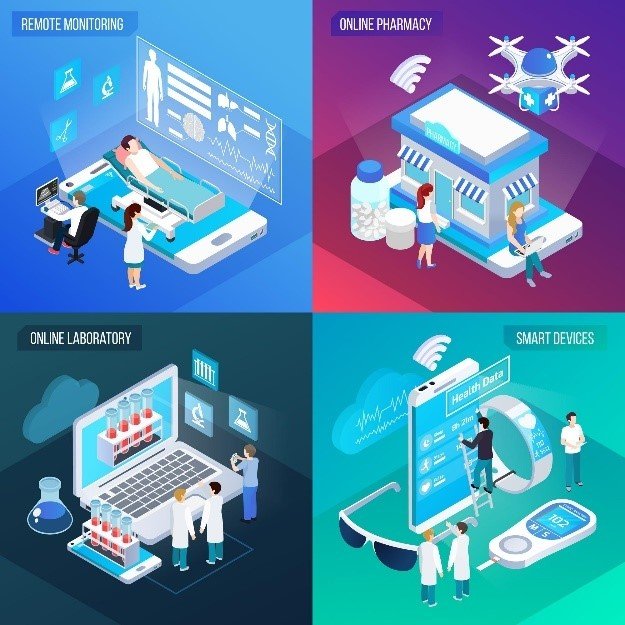
IoT in Action

The need for this transformation is rooted in the past. Pharma, for decades, operated through slow, manual processes. Imagine a factory where quality control involved paper logs and random sampling, missing micro-defects in drug batches. Or consider vaccine shipments where temperature deviations during transit were discovered only after reaching their destination, often too late. In clinical trials, researchers relied on self-reported symptoms and infrequent visits, limiting data quality and participant reach. All this led to high costs, regulatory setbacks, and even drug recalls. Now, sensors embedded in equipment and packages transmit real-time data to AI-powered systems that adjust parameters automatically or trigger alerts. Remote patient monitoring through wearables allows decentralised trials with higher retention, better diversity, and faster insights. AstraZeneca’s decentralised trials, for instance, have cut dropout rates by 35% while enhancing patient engagement.

Smart wearables are pushing this evolution further into the hands—and onto the wrists—of everyday people. Imagine a watch that doesn’t just tell time—it could save your life. Apple Watches today detect falls and can alert emergency services if there’s no response. Fitness trackers monitor heart rate variability, sleep, and oxygen levels, offering early warnings for potential issues. Diabetic patients use discreet, skin-worn glucose monitors that transmit blood sugar data in real-time to their phones. These aren’t just consumer electronics; they’re healthcare enablers, empowering patients and giving doctors access to a stream of accurate, timely data that can inform treatment.

IoT is also making pharmaceuticals safer and more trustworthy. By combining IoT with blockchain, companies are building transparent supply chains where every product’s journey is traceable and tamper-proof. Boehringer Ingelheim’s AI-powered vision systems scan for packaging defects with higher accuracy than any human inspector. Moderna’s use of digital twins and real-time monitoring has slashed quality deviations by over a third. Even energy and resource use are optimised through IoT, helping the industry meet sustainability goals without compromising quality or speed.

This blend of IoT and pharma is enabling better health outcomes on a global scale. Faster development cycles, safer supply chains, and more personalised care models are no longer future promises—they’re happening now. The pharma sector, once characterised by paperwork and guesswork, is transforming into one where data flows uninterrupted and decisions are made in real time. For patients, it means earlier interventions and more effective treatments. For the industry, it means fewer recalls, faster approvals, and stronger trust with regulators and the public.

Leveraging IoT in Patient Treatment and Monitoring

Of course, challenges remain. Data security, legacy system integration, and upfront implementation costs are all valid concerns. But the direction is clear. As the infrastructure matures and expertise spreads, the barriers will continue to fall.

IoT isn’t just a tool; it’s the foundation of a smarter, safer, more responsive pharmaceutical industry. And as companies continue to innovate, the ultimate beneficiaries will be the people: patients receiving better care, faster; families protected from disease; and healthcare systems that can finally shift from reactive to preventive. The future of medicine isn’t just digital. It’s connected.

Share.
Exit mobile version