

Trending Insights
Scaling CAE for High-Volume Manufacturing Environments Sona Comstar Integrating AI, Robotics and Electronics to Build a World-Class Mobility Technology Company: Priya Kapur at India-AI Impact Summit 2026 iCreate Drone Challenge Demo Day Showcases 14 Homegrown Startups Advancing India’s Indigenous Drone Technologies India AI Impact Summit 2026 Commences at Bharat Mandapam with Unprecedented Global Participation LMT Tools India Unveils Nation’s Largest Gear Cutting Tool Plant in Chakan BorgWarner to Supply Variable Turbine Geometry Turbocharger for Major European OEMs’ Hybrid Electric Vehicle Platform MIC Electronics Secures ₹4.45 Crore Orders from Eastern Railway ACMA–BCG Joint Study Highlights Smart Factories as a Key Enabler of India’s Auto Component Growth & Competitiveness CNH India Leads the Mechanization Movement with World-Class Crop Solutions Steelbird International Showcases Automotive Component Portfolio at ACMA Automechanika 2026 RODIM Launches R-Star Advanced Paint Protection Film at Automechanika 2026 Synopsys to Showcase AI-Driven Engineering Innovation at India AI Impact Summit 2026 Adhesive Dispensing in Automotive Body Shops: Driving Safety, Efficiency, and Durability MAHLE HeatX Range+ for More Range in Winter RIR Power Electronics Limited appoints N Ramesh Kumar as Managing Director and Chief Executive Officer Euler Motors and Jio-bp partner to accelerate EV charging infrastructure for commercial electric vehicles in India ACMA welcomes the India–US Trade Interim Agreement Framework Hindustan Zinc and Jawaharlal Nehru Centre for Advanced Scientific Research Advance Zinc-Ion Battery Technology for Large-Scale Energy Storage Cobots for Precision Manufacturing ACMA Automechanika New Delhi 2026 opens, spotlighting India’s global aftermarket ambitions Addverb Unveils Elixis-W, Its First Wheeled Humanoid, and Advanced Intralogistics Solutions at LogiMAT India 2026 How India Is Building Its Semiconductor Future Enabling India’s NextChapter in Sustainable, High-Performance Manufacturing Mahindra bags its biggest ever export order; 35,000 units of LCVs to be delivered to Agrinas Pangan Nusantara, Indonesia in 2026 Manufacturing the Future: Reforms, Technology, and the Road to Viksit Bharat 2047 Landmark US-India Trade Deal Eases Tariffs, Opens New Opportunities for Indian Industry SIAM Hosts 20th Styling & Design Conclave and 18th Automotive Design Challenge LSKB Aluminium Foils and JUPALCO Host Global Aluminium Foil Industry Leaders at Sonipat Facility During GLAFCO 2026 Budget 2026 Signals a Manufacturing-Led Growth Push Across Strategic Sectors Union Budget 2026: Manufacturing Industry Sets Its Expectations Customisable E-Rickshaws: The Rising Trend in Commercial Mobility Breaking the Bandwidth Barrier: How Co-Packaged Optics is Redefining High-Speed Connectivity Eastman IMPEX Showcased Advanced Formwork, Shoring and Scaffolding Solutions at World of Concrete 2026 Adani Defence & Aerospace and Embraer announce Strategic Partnership to Establish Regional Transport Aircraft Ecosystem in India Inovance India Expands Operations with New 50,000 sq. ft. Warehouse ACMA Welcomes the India–EU Free Trade Agreement From Local to Global: India’s Aftermarket and Auto component Industry Steps into the Global Fast Lane at ACMA Automechanika New Delhi IMTEX FORMING 2026 Showcased the Future of Metal Forming and Manufacturing New Greenfield Manufacturing Facility in India Strengthens Molding Solutions’ Global Strategy Swedish Clean-Tech Innovator KonveGas to Tackle India’s Energy Storage Bottleneck Neolite ZKW holds the Commemorative Ceremony of its Automotive Lighting Products Manufacturing Facility in Pune PARKSON sets a new benchmark in precision Precision at Scale: How Kennametal Is Powering the Future of Fastener Manufacturing From Compliance to Prevention: How Jarsh Safety Is Redefining Industrial Protection with Smart PPE Gulf Oil Lubricants Expands Infrastructure Portfolio with Key OEM Alliances Kennametal India to Showcase Tungsten Carbide Tooling Solutions for Fasteners Industry at Fastnex 2026 Juniper Green Energy Commissions Additional 72 MWp Solar Component of Hybrid Project in Solapur, Maharashtra ACMA Press Conference H1 FY26 TM Oil Lubrication Pump Advances Precision and Reliability in Centralised Lubrication Systems HGS Introduces AMLens: Accelerating AML Investigations with Explainable AI ACMA Automechanika New Delhi 2026 set to host its Largest Edition with 800+ Exhibitors from 19 countries Brandworks Technologies announces its foray into Automotive, EV Electronics Space at CES 2026 HONEYWELL MODULAR COIL WOUND HEAT EXCHANGER TECHNOLOGY TO ACCELERATE PRODUCTION AT COMMONWEALTH LNG FACILITY Avro India Leads Waste-to-Wealth Shift with India’s Largest Flexible Plastic Recycling Unit MATTER and Niron Magnetics set a new benchmark in EV Innovation, Reveal the First-of-Its-Kind Rare-Earth-Free Variable Flux Motor Building Trust in Industrial Data: The Foundation for Responsible AI Adoption in Manufacturing ideazmeet Launches dotsupply to Support Global Supply Chain Diversification How Precision Sensors Facilitate Intelligent Lubrication for Industrial Machines Beyond Energy Efficiency: Air-Saving Ejectors Drive Sustainability and Reduce Global Warming in Industry Strategic Capital, Strong Foundations: ELV Projects’ Growth Roadmap with Institutional Backing India’s AI Moment: Why Copyright could make or break innovation RSB Group pledges to achieve 50% renewable energy adoption and 45% Emissions Cut by 2030 BenQ Launches BSH and BDH Monitor Arms: Premium Ergonomic Workspace Solutions Built by Trusted Monitor Experts Eastman Impex Strengthens Global Outreach at MITEX 2025 in Moscow QAD | Redzone Marks 20 Years in India and Unveils the Next Era of Intelligent Manufacturing at Champions of Manufacturing India 2025 SquadStack.ai Launches In-App Voice AI Assistant to Reimagine Digital Customer Journeys AI in Manufacturing: How Predictive Tech Is Redefining Quality and Cost in Consumer Durables Kirloskar Group Unveils ‘Made in Kirloskar’ Initiative, Celebrating Engineers, Engineering and the Spirit of Making EMCO Mecof MEGAMILL: the giant milling machine that combines power, precision and connectivity Rohit Markan Appointed Executive Vice President AsiaPacific For Continental’s Industrial Solutions Business The World’s Leading Industrial Fair, HANNOVER MESSE, Returns Reinvented for 2026 Cummins India Showcases its Next-Generation Power Portfolio for Infrastructure and Construction at EXCON 2025 Tata Motors leads the way with innovative, sustainable and intelligent mobility solutions at EXCON 2025 Mahindra unveils its New Mini Compactor, ‘COMPAX’ for Road Construction Industry with cutting-edge Technology Building the Future of Mobility: India’s EV Progress Through Hybrid Manufacturing and System Integration EUROBOND launches EURODUAL, becomes one of the first Indian Brands to produce Engineered Solid Panels Uno Minda Takes Full Control of EV Components JV, Announces ₹40 Crore Investment Kinetiq Rrobotics Concludes a Successful Showcase at Clean India Show 2025 — A Strong Market Debut Backed by Star Engineers’ 37-Year Legacy VIAVI and QNu Labs Partner to Accelerate Quantum-Safe Network Security Toyota Kirloskar Motor Signs MoU with Government of Nagaland to Implement Strategic CSR Initiatives

India's Leading Magazine For Manufacturing Industries

| In the aftermath of the FAME II Policy’s release, Electronic Vehicles’ (EV) adoption in India has further increased due to the Battery Swapping Technology. 

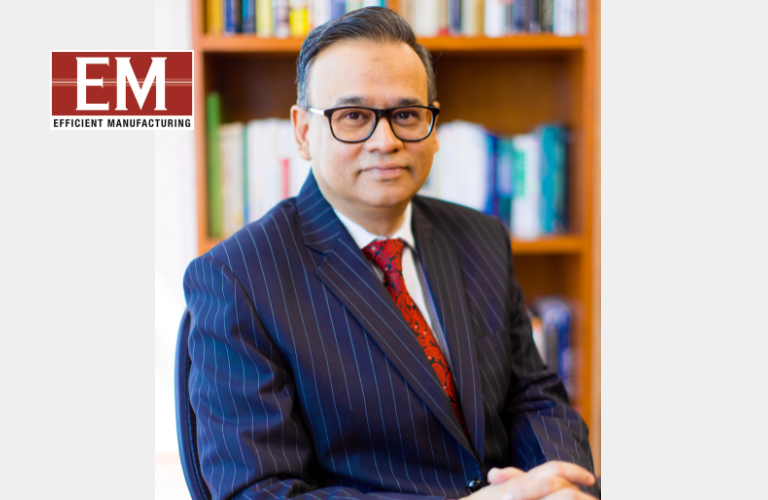
Kaushik Burman, 

General Manager, 

Gogoro India

India, one of the world’s largest automobile markets, has accelerated its journey toward net-zero carbon emissions and embraced the clean energy transition with remarkable resilience, reaching an inflection point. The Government of India, along with its key ministries of Heavy Industries, Consumer Affairs and Finance, aided by National think tanks, has collectively laid impetus to the decarbonisation goals with gusto, creating a manifest in the success of the FAME-II policy towards EV adoption, and has reached the 1 million mark concerning electric two-wheelers. 

Indeed, the ambitious goal to reach 100% electrification in our transportation sector has seen a great onset. This ambition has the potential of not only reducing the fiscal burden of expensive fossil fuel imports but also creating an ecosystem of upstream manufacturing and downstream infrastructure players, creating millions of jobs in the process.

An opportunity in the grabs

Two-wheelers are an integral part of India’s mobility ecosystem, especially in dense urban cities. Currently, the country stocks ~240 million units of internal combustion engine-powered two-wheelers, which increase by 18–20 million units per year. Based on the statistic, the total stock of two-wheelers in the country may reach the 300 million range by the end of this decade. Out of these, India has ~1.5–2 million units of EV two-wheelers, which amounts to less than 1% market penetration. 

Relevance of battery swapping


Kaushik Burman, General Manager, Gogoro India

Building an EV charging infrastructure that not only parallels that of a gasoline refuelling network but also converts the entire stock of Internal Combustion Engine (ICE) two-wheelers into EV implies setting up anywhere between 6–8 million DC fast-charging points, and approximately 5 times the number of AC slow-charging points. The adoption rates in the two-wheeler and three-wheeler segments can be significantly accelerated in densely populated metropolitan areas and tier 1 and 2 cities, where real estate is scarce and expensive. 

Cost benefits

While conventional batteries have larger sizes (kWh), the battery-swapping technology allows for smaller, swappable batteries that reduce overall costs. Since batteries account for a significant portion (4%–50%) of the total vehicle cost, the battery expenditure is borne by the Battery Swapping Station (BSS) rather than the vehicle owner, resulting in cost savings. 

For commercial fleet owners, battery swapping provides a quick refuelling solution that offers a means of reducing capital expenses while enabling them to utilise their assets more efficiently. A well-established network of swapping centres could prove to be a critical enabler for the mass adoption of EVs within India’s public transport system.

Reduced operational downtime

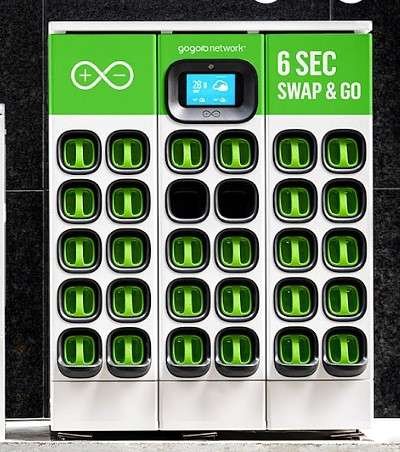
Charging electric vehicles with existing technologies can take several hours, causing inconvenience and range anxiety for drivers. However, with battery swapping, pre-charged batteries are readily available at swapping stations, allowing for a quick battery swap that takes only minutes. This drastically reduces charging time and provides a more convenient, hassle-free experience for drivers. Gogoro’s 6-second Swap & Go solution is a near-zero downtime for customers, which creates higher revenues using higher operational uptimes. 

Increased battery range

A dense network of battery-swapping stations allows drivers to extend the range of their electric vehicles without lengthy charging stops. By swapping out depleted batteries for fully charged ones, drivers can continue long journeys without worrying about running out of power, thus eliminating range anxiety. Consequently, this provides a more enjoyable and seamless driving experience.

Job creation

Battery-swapping stations can create new job opportunities in India, especially in rural parts, where traditional charging infrastructure may not be feasible. Staff and maintenance requirements at these stations provide employment opportunities, contributing to the local economy.

Use cases of higher asset utilisation

Gogoro has demonstrated multiple use cases in deploying battery-swapping infrastructure in generating additional revenue streams from the network, which is a value add for network partners, whilst also leading to higher infrastructure utilisation. Services such as demand response help balance the grid demand and supply during peak and off-peak hours. 

Necessity for infrastructure incentives

Battery-swapping infrastructure creation requires similar treatment of incentivisation as received by the direct charging solution providers under the FAME-II policy. While the Finance Minister of India, Nirmala Sitharaman, has laid strong emphasis on green growth in the Union Budget 2024, she has also announced that an EV battery-swapping policy is being framed in the Union Budget for FY2023. However, the much-awaited battery-swapping incentivisation policy is yet to be published, which has a huge potential to invite FDI into the battery-swapping network infrastructure creation. 

Thus, there is a pressing need for the government to incorporate the inputs received through numerous industry–policy-maker consultations and announce the battery-swapping incentive policy. In this regard, the industry applauds the Ministry of Consumer Affairs’ decision to defer interoperability standards and hopes that the policy will reiterate this and not foist any standards, keeping in line with the recent developments.

Providing a level playing field in terms of FAME-II incentives and equal GST rates will help the nascent nature of this industry. Present-day incentives are provided to vehicles powered by direct charging, but not to vehicles enabled by battery swapping, invariably resulting in a skewed market. As the creation of the enabling battery swapping infrastructure is capex-heavy, suitable incentives will catalyse the EV adoption rates. This makes the level playing field even more pertinent.

This year is India’s moment of reckoning, as the country heralds its rise globally through its G20 presidency. Electrification of the transportation sector, with emphasis on Smart Mobility, innovative driving technologies and business models is quintessential to India’s sustained leadership in achieving net-zero goals.

Share.
Exit mobile version