
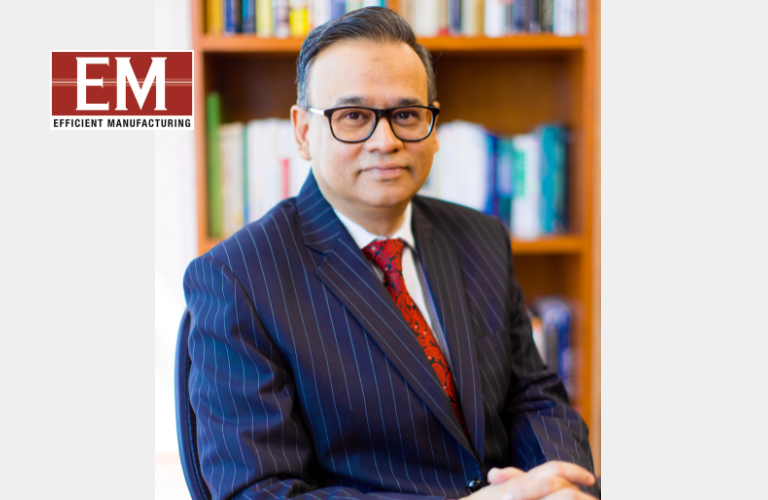



| Author: Nitin Jirafe, Engine Business Leader, Cummins India and MD Tata Cummins
India, a nation on the cusp of global prominence, is at a critical juncture. As the world’s fifth largest economy, third-largest energy consumer, and most populous country, it has an important role to play in sustainable development.
Energy is a key driver of economic development and is also the biggest contributor to the world’s GHG emissions. With India being one of the fastest growing economies and projected to reach $5 trillion over the next few years, the need to find sustainable energy solutions has never been more urgent.
It’s thus imperative that the country’s economic future would be shaped by its commitment to sustainability. India’s bold “Panchamrit” pledge at COP26, promising net-zero emissions by 2070, demonstrates its visionary strategy for a greener tomorrow. This ambitious commitment, coupled with intermediate targets for renewable energy adoption and emission reduction, positions India as a key player in the global fight against climate change.
India’s Energy Landscape: The Industry Imperative:
As for any large economy, India’s energy mix has heavily relied on fossil fuels. Availability and economic viability for large-scale energy demands, powering its industrial growth and economic transformations, have been the primary drivers for the same.
With energy import bills exceeding $150 billion in recent years, putting burden on the nation’s foreign exchange reserves, and deteriorating air quality in major cities are driving the nation toward an essential energy revolution.
The government’s response has been multifaceted, spanning various renewable and alternative energy initiatives. The National Hydrogen Mission, National Solar Mission, a strong push for electric mobility, and ambitious biofuel blending targets highlight a structured approach to diversify India’s energy mix. Together, these initiatives reflect a clear commitment to move beyond fossil fuels, creating a sustainable future.


Nitin Jirafe, Engine Business Leader, Cummins India and MD Tata Cummins
Transport Sector: A Tale of Two Segments:
The transport sector consuming 20% of India’s energy, embodies both progress and challenges.
Rapid transformation is visible in the small and light vehicles segment through multiple pathways. CNG adoption, especially in the public transport fleets, led the initial wave, followed by an aggressive push towards Electric mobility. This momentum is supported by government initiatives like Faster Adoption and Manufacturing of (Hybrid &) Electric Vehicles (FAME), PM E-DRIVE and Production Linked Incentive (PLI) policies offering substantial incentives. Additionally, the successful implementation of ethanol-blended gasoline, moving toward E20 by 2025, demonstrates India’s commitment to cleaner fuels.
Despite defined plans for the transformation of urban and last-mile delivery vehicles, a clear roadmap is still awaited for the heavy and long-haul commercial vehicle segment. This sector, vital to nation’s economy and consuming approximately 40% of the country’s diesel, faces more complex transition challenges. While lighter urban fleets can shift to CNG or electric solution, but the heavy commercial vehicles that navigate longer routes and heavier payloads demand different solutions.
Natural gas, particularly LNG, could serve as a viable transition fuel for long-haul transportation. However, limited LNG terminal infrastructure and the need for cryogenic storage and handline facilities have slowed its adoption. While the government plans to establish 1000 LNG stations along major highways by 2030, the current network remains inadequate for widespread adoption.
Battery-electric vehicles, deliver strong promise for urban applications, but face limitations in the heavy-duty segment. The combination of heavy payloads, long routes, and the absence of battery swapping or charging infrastructure makes these pure electric solutions currently impractical for most long-haul operations.
Hydrogen emerges as perhaps the most promising solution for heavy-duty transportation. Green hydrogen, produced through electrolysis powered by renewable energy, holds immense potential to revolutionize India’s energy landscape. India’s hydrogen roadmap, targeting 5 million tons of green hydrogen production by 2030, could revolutionize not just industrial sectors but also transportation. Hydrogen Internal Combustion Engine (H2ICE) technologies are already demonstrating the potential of hydrogen-based powertrains to shape India’s mobility future, particularly for long-haul transportation.
Technology as Game Changer:
Technological advancements are pivotal in facilitating a shift to alternative fuels, especially in transportation, where high performance, reliability and Total Cost of Ownership (TCO) are essential. For instance, innovations in battery storage technology and energy management systems are enabling the transition to zero-emission vehicles. Given the multiple fuel environment, the investments required for innovation are high, the country must focus on developing solutions that leverages the investments and architecture to churn out different platforms, offering versatility and economies of scale for adoption of alternate fuels in transportation sector.
The upcoming Bharat Mobility Global Expo promises to showcase a broad range of innovative, multi-fuel technologies and solutions, poised to reshape country’s transportation landscape. The adoption of such technologies will be a significant step toward realizing the promise of India’s green future.
Navigating the Road Ahead:
While India’s roadmap for a greener tomorrow is promising, the path forward is not without obstacles. The shift to alternate fuels demands new technology development and the creation of viable ecosystems that can scale efficiently. This requires coordinated efforts across the value chain, from fuel production and distribution to end-user adoption.
Infrastructure development is the most immediate challenge, requiring substantial investment to support the production, storage, and distribution of alternative fuels. For example, hydrogen vehicle requires strategic network plan of refueling stations and production facilities, that must be developed and later scaled up to support the transition effectively. Cost is another barrier, especially for green hydrogen production, which remains more expensive than conventional fossil fuels. However, is it expected that as technology matures and economies of scale are achieved, the production costs will decline, making hydrogen a more competitive and viable option in the long run.
Workforce upskilling and development is also a pressing need. Each alternative fuel technology brings unique safety protocols, maintenance needs, and technical requirements. For instance, hydrogen handling requires specialized skills to ensure safe and efficient operation. Likewise, electric and hybrid vehicle technologies call for expertise in battery diagnostics and management. India will need thousands of trained technicians across the country to support this evolving energy landscape.
Looking Ahead: India’s Leadership Opportunity:
India’s journey towards net-zero emissions, is as much an opportunity as it is a necessity. Achieving these ambitious targets would require collective action, blending government policies with public-private partnerships that incentivize clean energy investments, develop robust infrastructure, and create a skilled workforce. With its unique energy challenges and opportunities, India is well-positioned to lead the global shift towards sustainable energy. By adopting this coordinated approach, country can achieve a model of sustainable development that balances economic growth with environmental responsibility and, in process, emerges as a global beacon of sustainable energy transformation.